
Table of Contents
ToggleNeem Oil Uses for Plants (Benefits and Application Guide)
If you spend some time around home gardens, you’ll often hear people talking about neem oil. It’s one of those things that many gardeners try at least once, especially when pests start showing up on leaves or buds. Neem oil has been used in Indian households for a long time, so it feels familiar rather than something new or complicated.
In most home gardens, neem oil is seen as a gentle option compared to strong chemical sprays. People usually turn to it when they want to manage pests but still keep their plants, soil, and surroundings relatively balanced. It’s not magic, but when used properly, it can fit nicely into regular plant care.
This guide is written in a simple, practical way to help beginners understand neem oil uses for plants, how it generally works, and how it’s commonly applied in home gardens.
What Is Neem Oil and Why Gardeners Use It

Neem oil is extracted from the seeds of the neem tree. In gardening, it’s mainly used as a natural pest control option and sometimes as a preventive spray.
In most home gardens, neem oil is commonly used because:
It is plant-based and biodegradable
It can help manage common garden pests
It is easy to mix and apply at home
Neem oil doesn’t usually kill insects instantly. Instead, it works slowly and affects their feeding or growth cycle, which is why patience is important.
Neem Oil Uses for Plants in Home Gardens
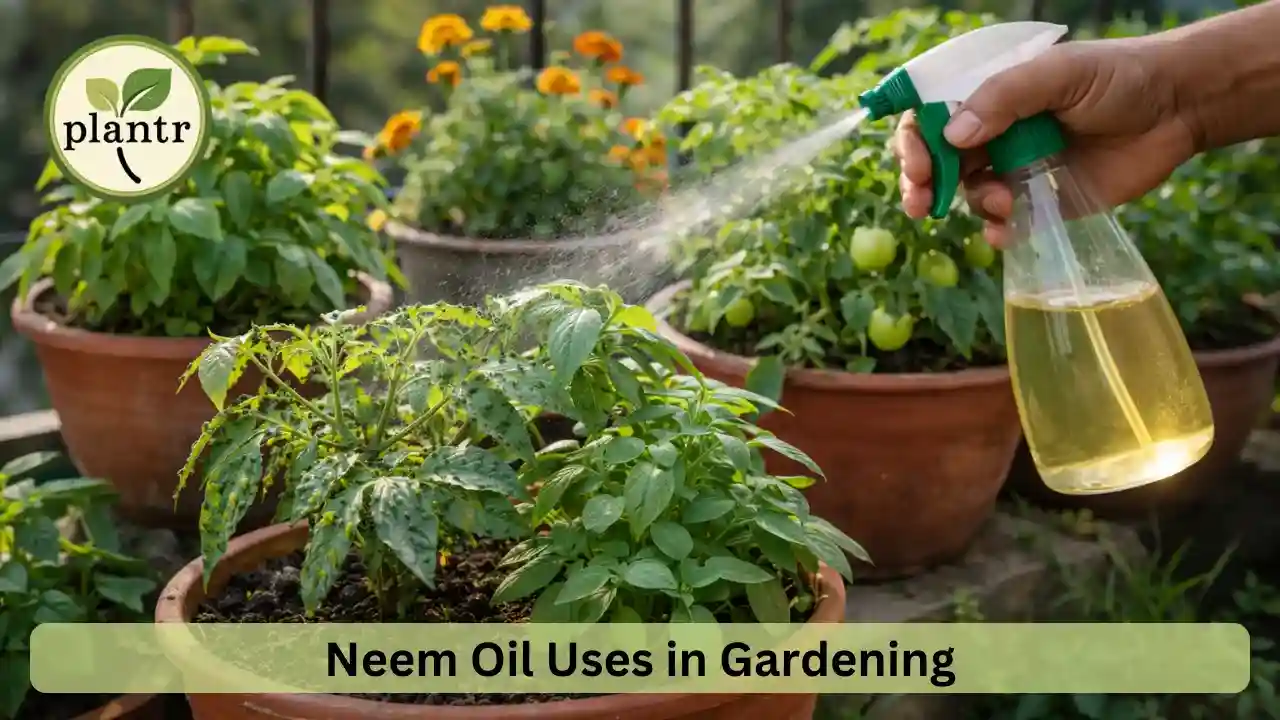
Neem oil has multiple uses, depending on how and when it’s applied. Below are some common ways gardeners use it.
Controlling Common Plant Pests
One of the most popular neem oil uses for plants is pest control. It is commonly used for insects like:
Aphids
Mealybugs
Whiteflies
Spider mites
Thrips
In most cases, neem oil works best when sprayed early, before pests multiply too much.
Managing Fungal Issues on Leaves
Neem oil is also sometimes used to manage mild fungal problems, such as:
Powdery mildew
Leaf spot issues
Early-stage rust
It is generally used as a preventive spray rather than a cure for severe infections.
Protecting New Growth
Tender new leaves and shoots are often the first targets for pests. Many gardeners spray neem oil lightly on new growth to reduce insect damage.
Benefits of Using Neem Oil on Plants
Neem oil is not perfect, but it does have some practical benefits when used correctly.
Gentle on plants when diluted properly
Less harmful to beneficial insects if sprayed in the evening
Does not build long-term residue in soil
Suitable for vegetables and ornamentals in most home gardens
These benefits are why neem oil is often preferred for kitchen gardens and balcony plants.
How Neem Oil Works on Pests
Neem oil does not act like chemical insecticides. It usually:
Disrupts insect feeding
Affects egg laying
Slows down growth and reproduction
Because of this, results are gradual. In most home gardens, repeated applications are needed to see noticeable improvement.
How to Apply Neem Oil on Plants (Step-by-Step)
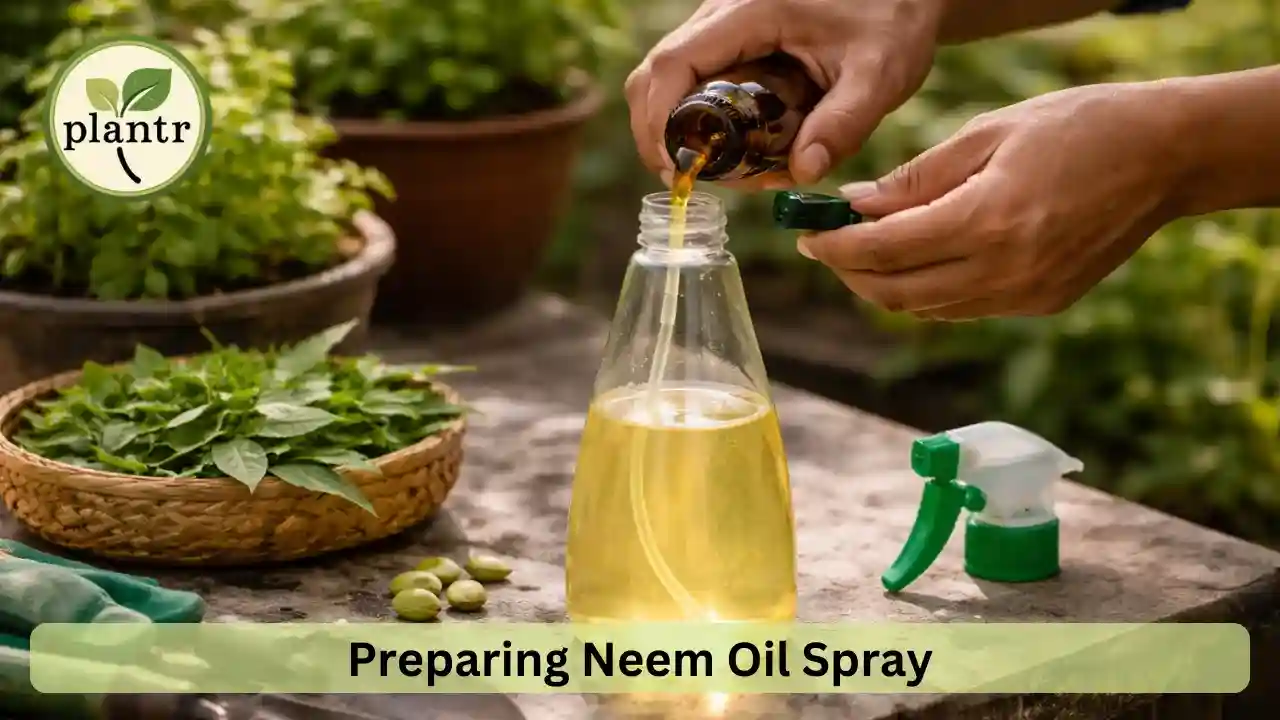
Proper application matters more than the product itself. A small mistake in mixing or timing can reduce its effect.
Neem Oil Spray for Plants – Basic Mixing Guide
A commonly used neem oil spray for plants includes:
2–3 ml neem oil
1 litre water
A few drops of mild liquid soap (as an emulsifier)
Always mix fresh solution before use, as neem oil loses effectiveness over time.
Best Way to Spray Neem Oil
Spray both sides of the leaves
Focus on stems and leaf joints
Use a fine mist, not heavy dripping
In most home gardens, hand sprayers work well for even coverage.
Best Time to Spray Neem Oil on Plants
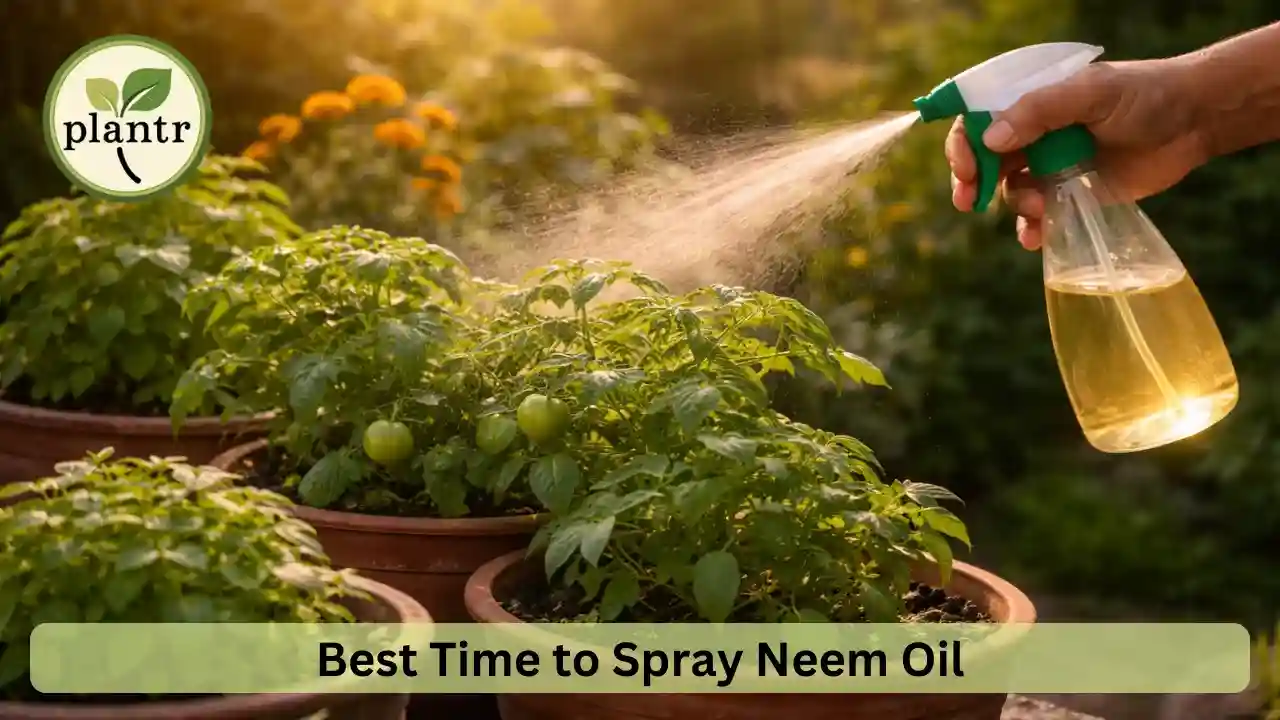
Timing plays a big role in how effective neem oil can be.
Early morning or evening is generally best
Avoid spraying in strong sunlight
Do not spray before rain
Spraying at the right time also helps protect beneficial insects like bees.
Neem Oil for Indoor Plants vs Outdoor Plants
Neem oil can be used for both indoor and outdoor plants, but the approach may differ slightly.
Indoor Plants
Use lighter concentration
Spray in a ventilated area
Wipe excess oil from leaves if needed
Outdoor Plants
Slightly stronger dilution is commonly used
Repeat spraying every 7–10 days
Monitor plants after rain
How Often Should Neem Oil Be Used
In most home gardens:
For pests: once every 7–10 days
For prevention: once every 15 days
Overuse is not helpful and can stress plants, especially delicate ones.
Practical Tips for Better Results
These small habits can make neem oil more effective:
Always test spray on one leaf first
Shake the solution while spraying
Clean the sprayer after use
Combine neem oil with regular plant inspection
Neem oil works best as part of overall plant care, not as a one-time fix.
Common Mistakes Beginners Should Avoid
Many first-time users make similar mistakes. Avoiding these can save plants from stress.
Using too much neem oil
Spraying during hot afternoons
Applying on wilted or weak plants
Expecting instant results
Neem oil is slow and steady. Rushing usually leads to disappointment.
Is Neem Oil Safe for All Plants?
Neem oil is generally safe for most plants when diluted correctly. However:
Some plants with very soft leaves may react
Newly transplanted plants may be sensitive
Always observe after first application
In gardening, observation is as important as treatment.
FAQs
Neem oil is usually applied every 7 to 14 days as a preventive measure. If there is an active pest problem, it can be used once every 5–7 days until the issue improves. However, overuse may stress plants, so it’s important to follow proper dilution instructions and avoid daily spraying.
Yes, neem oil can cause leaf burn if applied in strong concentration or sprayed during hot, direct sunlight. It is best to apply neem oil early in the morning or in the evening when temperatures are lower. Always test the spray on a small part of the plant first before treating the entire plant.
White marks or oily residue can appear if the solution is too concentrated or not mixed properly with water and a mild emulsifier (like liquid soap). Shaking the spray bottle before each use and wiping leaves gently after a few hours can help reduce residue buildup.
Yes, neem oil can be safely used on indoor plants if applied in a well-ventilated area. Avoid spraying near furniture or walls, as it may leave stains. Light misting and proper airflow will help protect indoor plants from pests without causing odor buildup.
Using Neem Oil as a Supportive Garden Care Tool
Neem oil has become a trusted part of many home gardening routines because it supports a simple and mindful approach to plant care. It is widely used for managing common pests, protecting leaves, and maintaining overall plant health. If you’re dealing with insects frequently, understanding the common plant pests affecting home garden plants can also help you decide when and how neem oil should be applied.
In most home gardens, neem oil works best when combined with balanced watering, proper sunlight, and healthy soil. It is not a replacement for good gardening habits, but when used thoughtfully and in moderation, it becomes a reliable support for plant protection.
Consistency matters more than heavy application. When used patiently and at the right intervals, neem oil can naturally fit into your regular plant care routine.
In my own garden, applying a mild neem solution in the evening every couple of weeks helped prevent recurring pest issues without harming new growth.