
Table of Contents
ToggleEssential Gardening Tools for Beginners
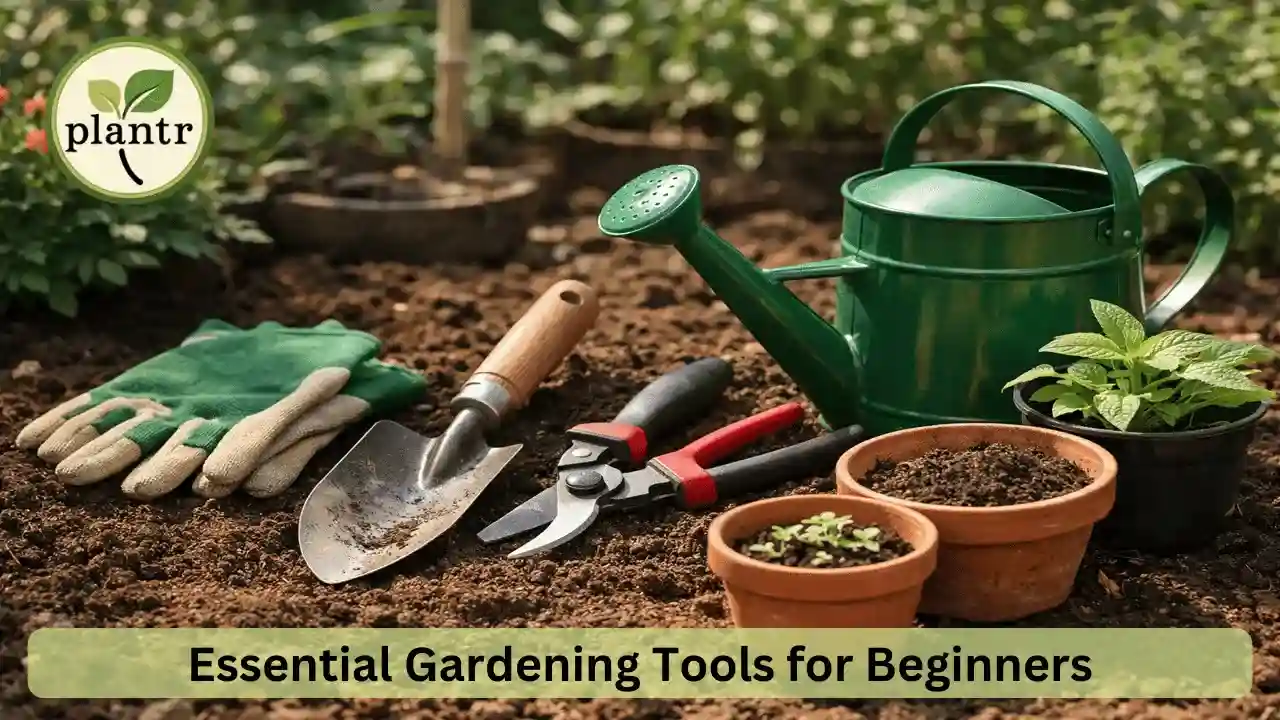
Starting a garden is exciting. Whether it’s a few pots on the balcony or a small patch near your home, gardening slowly becomes a part of daily life. In the beginning, most people focus on plants and seeds, but tools matter just as much.
You don’t need a shed full of equipment to get started. In most home gardens, a few simple tools are enough to do daily work comfortably. The right tools save time, reduce effort, and make gardening more enjoyable.
This guide shares essential gardening tools for beginners, explained in a simple, practical way. These are tools commonly used in Indian home gardens, especially for pots, terraces, and small ground spaces.
Why Gardening Tools Matter for Beginners
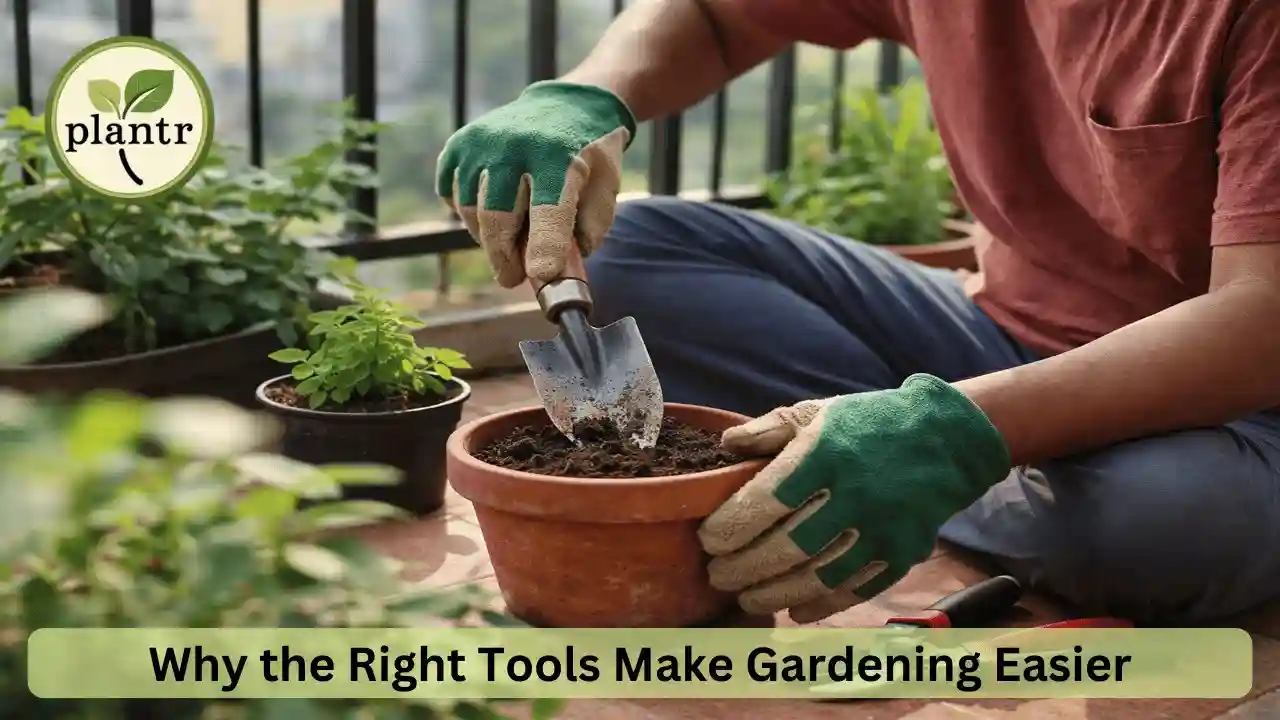
Many beginners try to manage everything with bare hands or household items. That works for a while, but it often leads to tired hands, uneven soil work, or damaged plants.
Basic gardening tools help you:
Work more neatly and safely
Avoid unnecessary strain on hands and back
Take better care of plants in the long run
In most home gardens, tools don’t need to be fancy—just comfortable and reliable.
Hand Tools Every Beginner Should Have
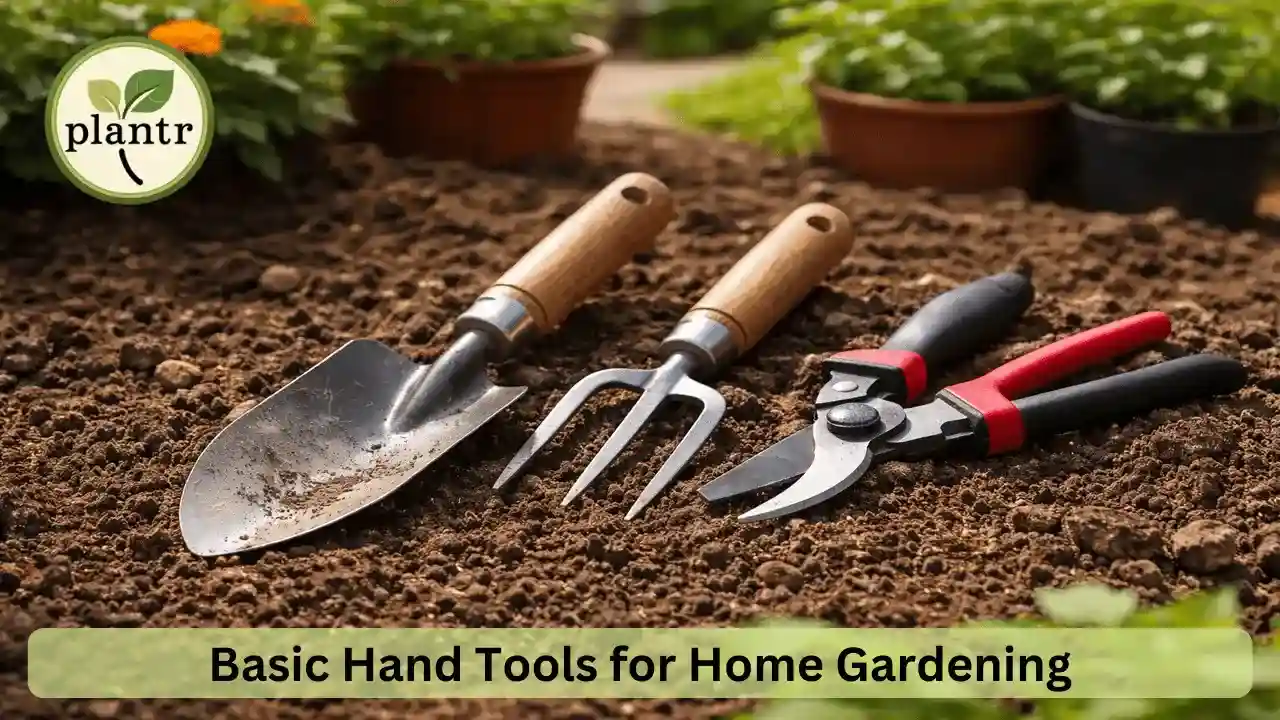
Hand Trowel
A hand trowel is one of the most commonly used gardening tools.
It is generally used for:
Filling pots with soil
Digging small holes for planting
Mixing compost into potting mix
Practical tip:
Choose a trowel with a sturdy metal head and a comfortable grip. Very thin plastic ones may bend after regular use.
Common mistake:
Using kitchen spoons instead of a trowel often leads to uneven planting depth.
Hand Fork (Garden Fork)
A hand fork looks small but does a lot of work.
It helps with:
Loosening compact soil
Mixing compost or cocopeat
Removing small weeds from pots
In balcony and terrace gardens, soil tends to harden over time. A hand fork makes aeration easier.
Pruning Shears (Secateurs)
Pruning shears are essential for plant care.
They are commonly used to:
Cut dry or yellow leaves
Trim overgrown stems
Harvest herbs and flowers
Clean cuts help plants recover better than tearing stems by hand.
Practical tip:
Wipe blades after use, especially when cutting diseased parts.
Tools for Watering Plants Properly
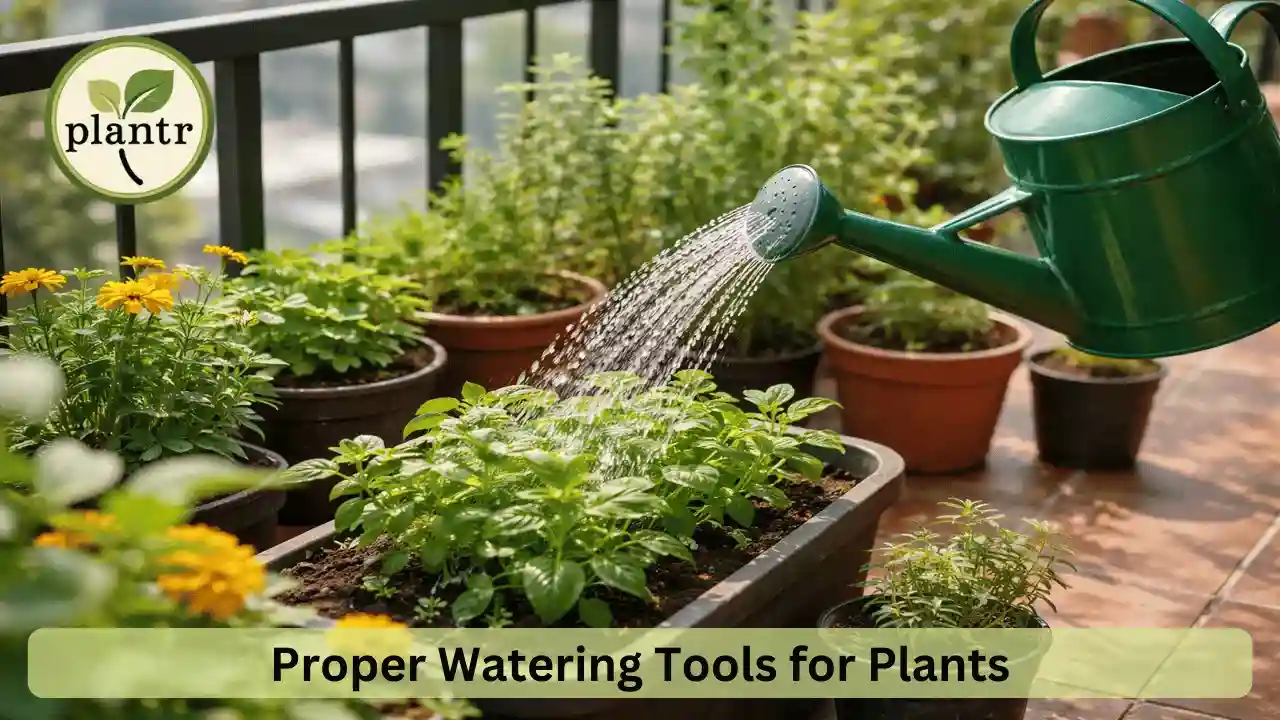
Watering Can
A watering can gives controlled and gentle watering.
It is generally preferred for:
Small gardens and pots
Seedlings and young plants
Indoor or balcony plants
A can with a narrow spout helps prevent soil from washing away.
Common mistake:
Pouring water too fast can disturb roots, especially in small pots.
Garden Hose (Optional)
For larger home gardens, a hose can be useful.
It is commonly used when:
There are many plants to water
Ground gardening is involved
Make sure water pressure is low to avoid damaging plants.
Spray Bottle
A simple spray bottle is very useful in most home gardens.
It helps with:
Light watering of seedlings
Spraying neem oil or soap solution
Increasing humidity for indoor plants
.
Soil and Potting Related Tools
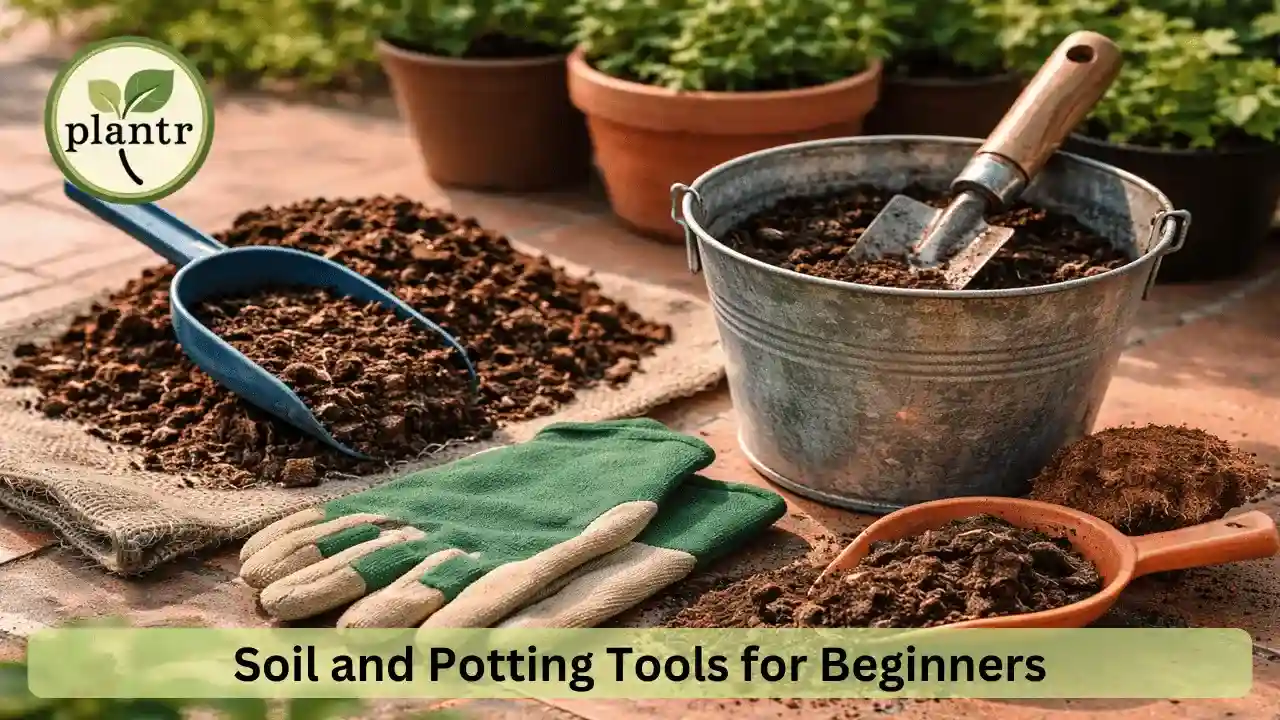
Gardening Gloves
Gloves protect hands while working with soil and plants.
They are useful for:
Handling compost and manure
Removing weeds
Avoiding cuts or insect bites
Choose breathable gloves that allow finger movement.
Small Bucket or Tub
A bucket may not look like a gardening tool, but it is extremely practical.
It is commonly used for:
Mixing potting mix
Carrying soil or compost
Collecting dry leaves
Using a separate bucket keeps gardening mess away from household items.
Soil Scoop or Old Mug
For daily gardening work, many gardeners use:
A soil scoop
An old steel or plastic mug
These work well for transferring soil or compost into pots.
Basic Tools for Garden Maintenance
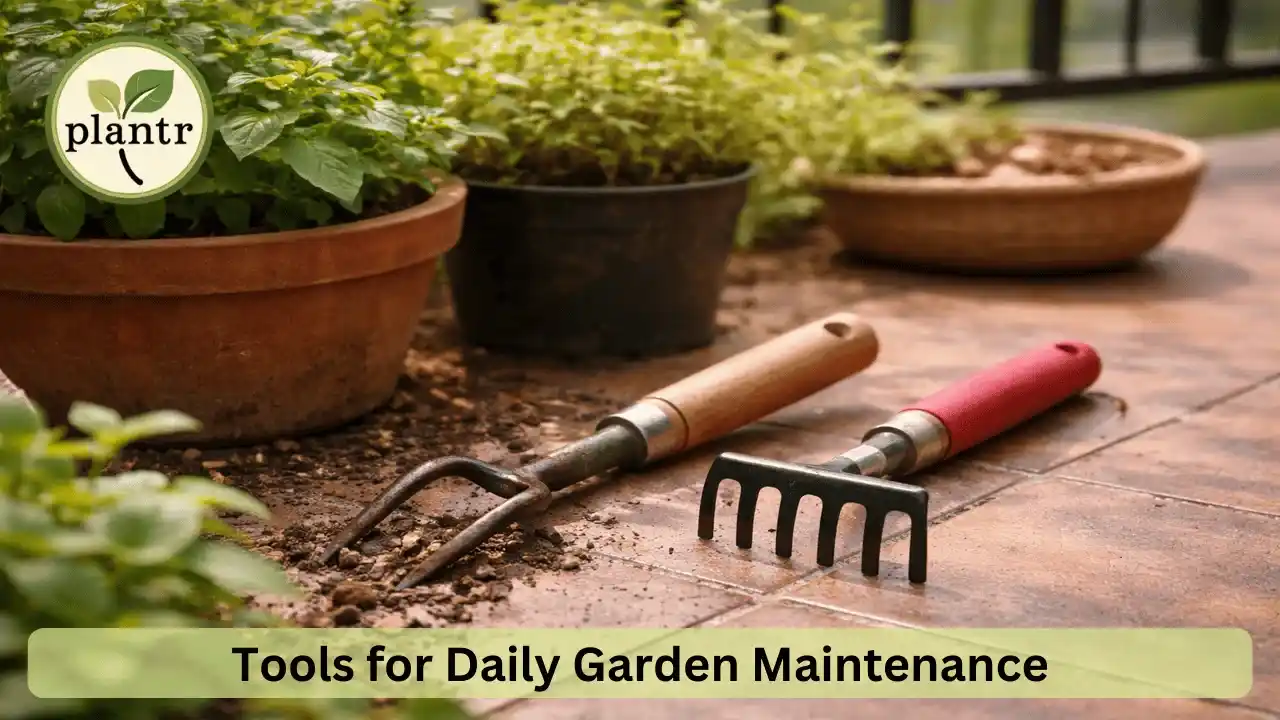
Weeding Tool
Weeds compete with plants for nutrients and water.
A simple hand weeder helps:
Remove weeds from roots
Clean tight spaces between plants
Regular weeding keeps plants healthier in most home gardens.
Small Garden Rake
A small rake is helpful for:
Leveling soil surface
Collecting fallen leaves
Cleaning terrace or garden area
It keeps the garden tidy and manageable.
Tools for Beginners Growing Seeds
Seedling Tray
Seed trays are commonly used to:
Germinate vegetable or flower seeds
Control moisture during early growth
They are especially useful during seasonal planting.
Labels or Markers
It’s easy to forget what was planted where.
Simple labels help:
Identify plants
Track sowing dates
This is very useful when growing multiple varieties.
Practical Tips for Choosing Gardening Tools
Start with basic tools only
Choose comfort over appearance
Avoid very cheap tools that break easily
Clean tools after use to extend life
In most cases, one good tool lasts longer than replacing many poor-quality ones.
Common Mistakes Beginners Make with Tools
Buying too many tools at once
Ignoring tool maintenance
Using the wrong tool for the job
Leaving tools outdoors, causing rust
Gardening becomes easier when tools are simple and well cared for.
How Many Tools Do You Really Need?
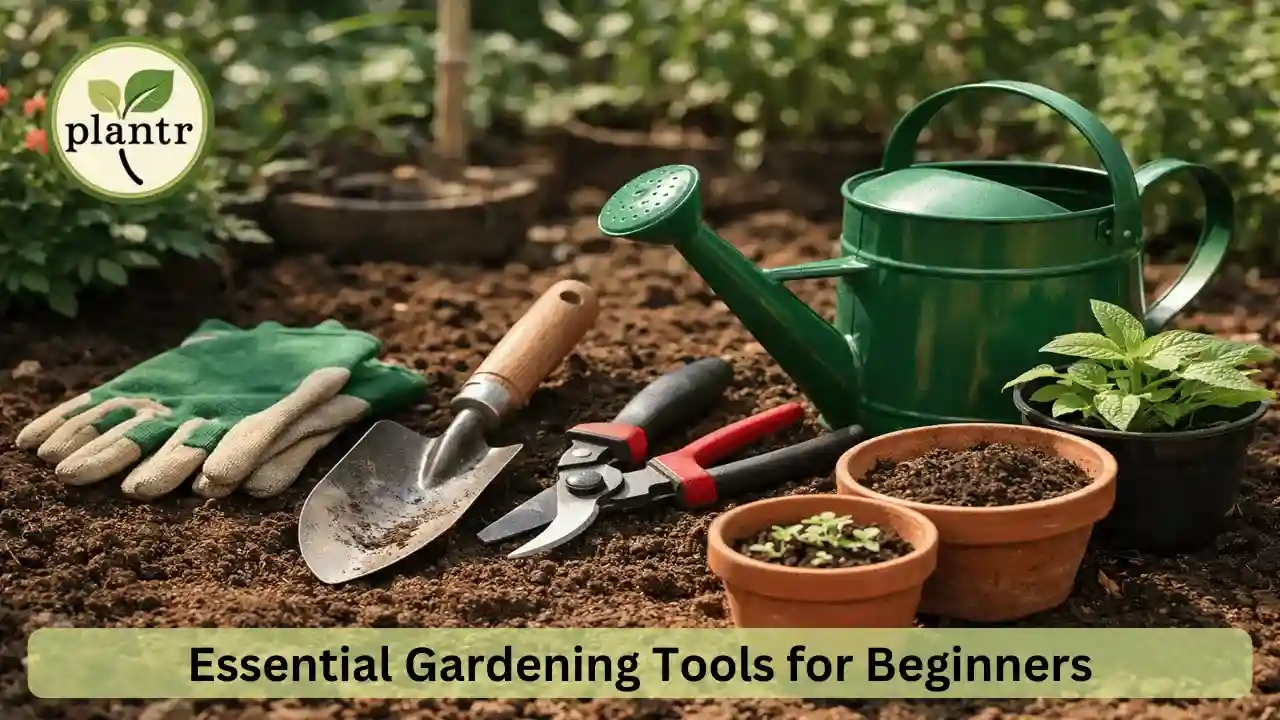
For most beginners, these are enough:
Hand trowel
Hand fork
Pruning shears
Watering can
Gloves
Spray bottle
Everything else can be added slowly as the garden grows.
FAQs
Many beginners buy too many tools at once or choose heavy, uncomfortable equipment. This makes gardening feel difficult instead of enjoyable. Starting with simple, lightweight tools that match your garden size makes the experience easier and more motivating.
If you are gardening in pots, balconies, or small beds, hand tools are usually enough. Long-handled tools are more useful for large ground gardens where bending frequently can strain your back. Your gardening space should guide your choice.
Yes, tool size makes a big difference in small spaces. Large spades or rakes can feel awkward in containers or tight areas. Compact tools allow better control and reduce accidental damage to nearby plants.
Upgrade your tools when you notice signs like frequent bending, loose handles, rust, or difficulty completing tasks efficiently. As your garden expands, investing in stronger and more specialized tools becomes practical rather than optional.
Start Simple and Grow with Experience
Gardening isn’t about owning the most advanced tools. It’s about understanding your plants and enjoying the time you spend caring for them. Essential gardening tools for beginners are meant to make tasks easier, not to make the process feel complicated. If you’re setting up a small space garden, reading about balcony gardening for beginners can help you understand how to start with limited space and basic tools.
In most home gardens, a small collection of simple tools is more than enough to plant and maintain healthy greenery. Pairing the right tools with a good growing medium—such as the best potting mix for balcony gardening can make plant care even more effective and manageable.
The best approach is to begin with the basics and build gradually. Let your confidence grow along with your garden, one season at a time.
In my own garden, starting with just a hand trowel, pruner, and watering can was enough to comfortably manage my balcony plants in the early days.