
Table of Contents
ToggleHow Often Should You Water Indoor Plants?
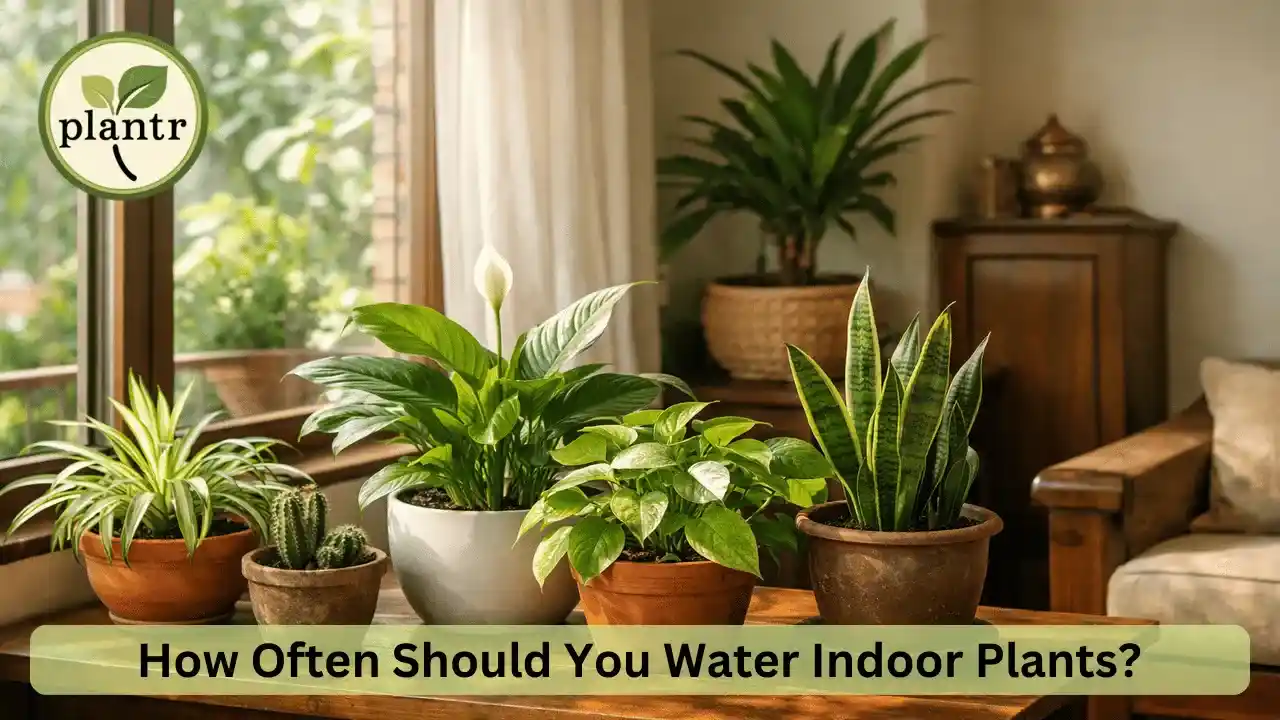
If you’re new to indoor gardening, this is probably the first question that comes to mind: How often should you water indoor plants?
And honestly, you’re not alone. Almost every beginner either waters too much or too little in the beginning.
I’ve been growing indoor plants at home for years, and one thing I’ve learned is this — watering is not about a fixed schedule. It’s about understanding your plant, your home, and your habits. Once you get that right, indoor plants become much easier to care for.
In this article, I’ll explain how often should you water indoor plants in a simple, practical way, just like one home gardener guiding another.
How Often Should You Water Indoor Plants? (The Short Answer)
There is no one-size-fits-all answer.
Generally speaking, most indoor plants need watering once every 5–10 days, but this depends on many factors like plant type, pot size, season, and indoor temperature.
Some plants like moist soil, while others prefer the soil to dry out completely between watering. This is why copying someone else’s watering routine often leads to problems.
Why Watering Indoor Plants Is Tricky
Indoor plants live in a controlled environment. They don’t get rain, wind, or natural soil drainage like outdoor plants.
In most Indian homes:
Air circulation is limited
Pots may not dry quickly
Light levels vary from room to room
Because of this, overwatering indoor plants is more common than underwatering.
Factors That Decide How Often You Should Water Indoor Plants
1. Type of Indoor Plant
Different plants have different watering needs.
Low water indoor plants (snake plant, ZZ plant) need watering less often
Tropical indoor plants (peace lily, calathea) like slightly moist soil
Succulents and cacti need very little water
Always check what kind of plant you have before deciding a routine.
2. Pot Size and Drainage
Small pots dry faster than big pots
Pots without drainage holes hold water longer
If water cannot drain out, roots may rot even if you water only once a week. Proper drainage plays a huge role in indoor plant watering frequency.
3. Season and Weather
In Indian conditions:
Summer: plants usually need more frequent watering
Monsoon: soil stays wet longer, so reduce watering
Winter: growth slows down, so watering should be less
Many beginners forget to change their routine with seasons, which leads to yellow leaves or root problems.
4. Indoor Temperature and Light
Plants placed near:
Windows
Balconies
Bright sunlight
will dry faster than plants kept in low-light corners.
So when asking how often should you water indoor plants, always think about where the plant is kept.
How to Check If Your Indoor Plant Needs Water
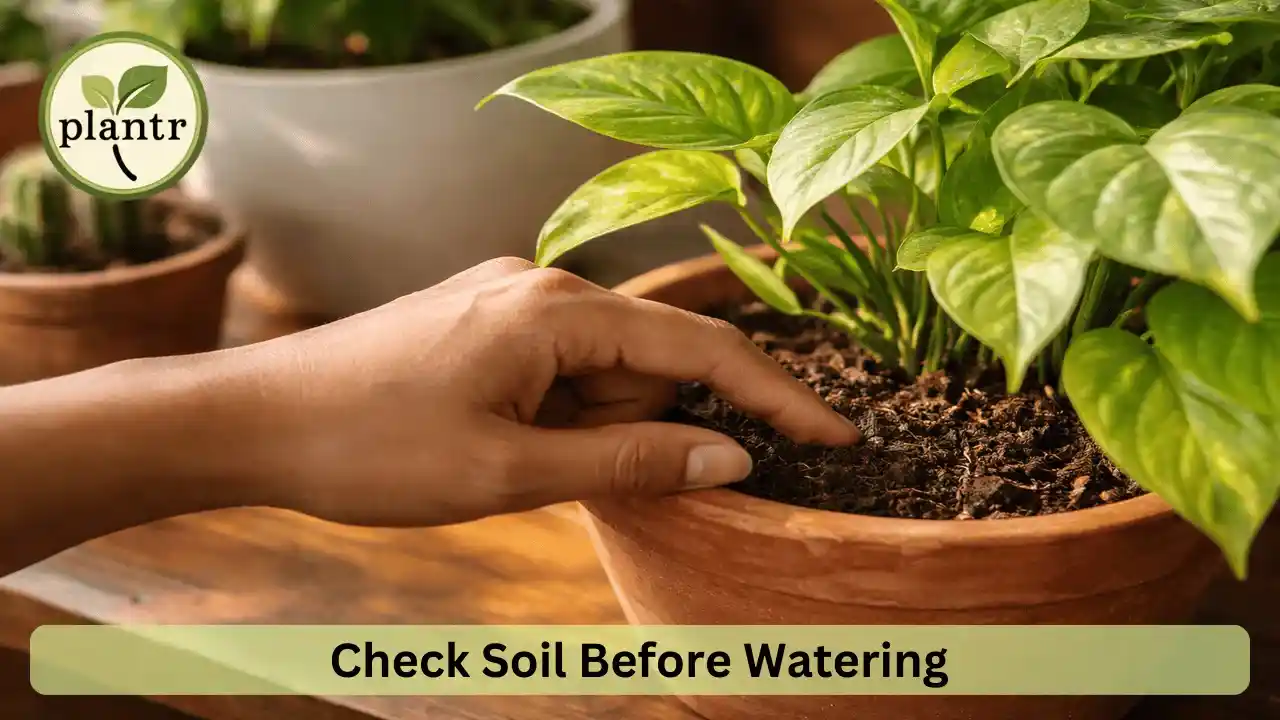
Instead of watering by calendar, use simple checks.
Finger Test (Most Reliable)
Insert your finger 1–2 inches into the soil
If it feels dry, it’s time to water
If it feels moist, wait a few more days
This single habit can prevent most watering mistakes.
Weight Test
Lift the pot:
Light pot = soil is dry
Heavy pot = soil still has moisture
Over time, you’ll naturally understand the difference.
Common Signs You’re Watering Too Much or Too Little Signs of Overwatering Indoor Plants
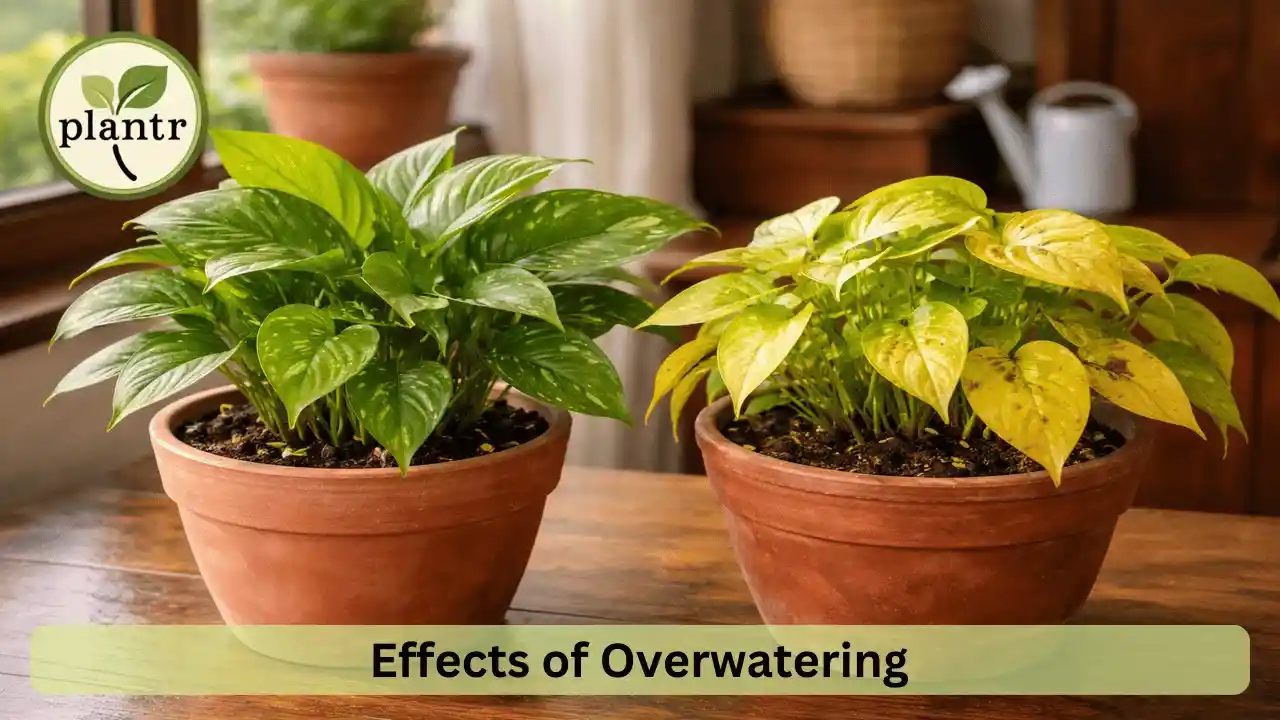
Yellow leaves
Soft, mushy stems
Fungus or bad smell from soil
Leaves falling even when soil is wet
This is one of the most common indoor plant watering mistakes.
Signs of Underwatering Indoor Plants
Dry, crispy leaf edges
Drooping leaves
Soil pulling away from pot edges
Both problems look serious but are usually easy to fix once you adjust watering.
General Watering Guide for Popular Indoor Plants
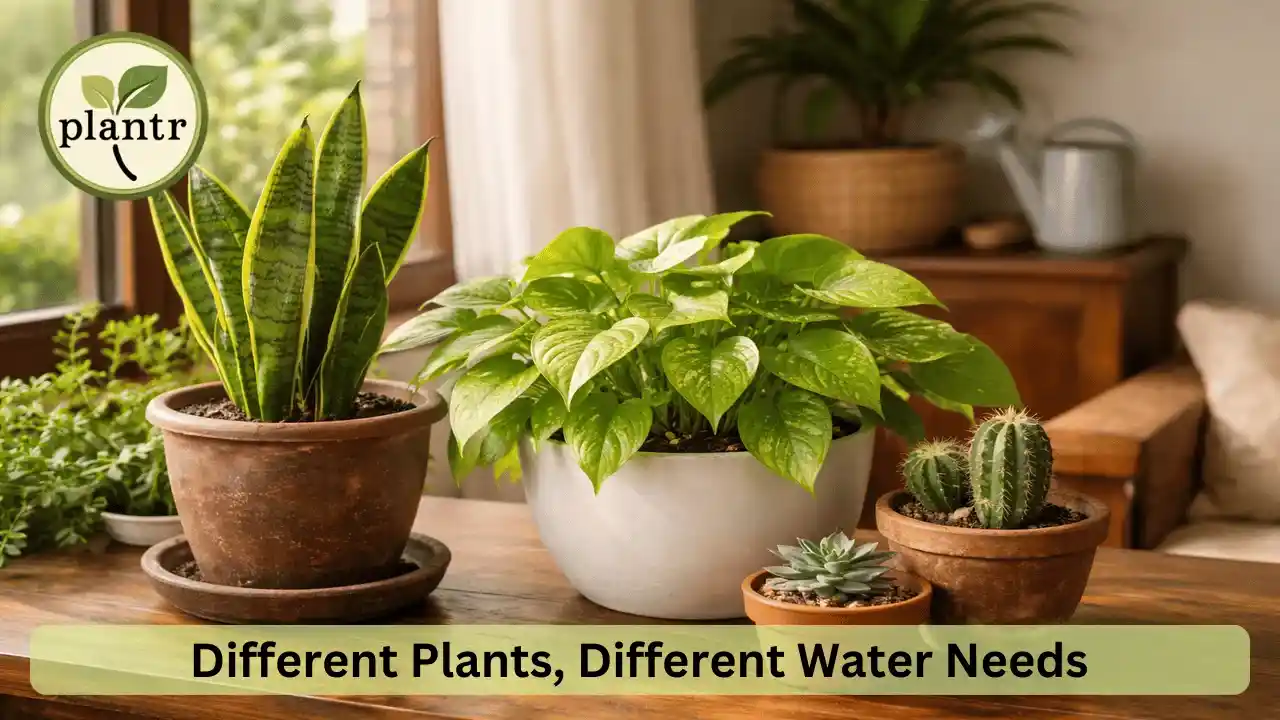
This is a general indoor plant watering schedule, not a rulebook:
Snake plant: every 10–15 days
Money plant: every 7–10 days
Peace lily: every 4–6 days
Aloe vera: every 12–15 days
Spider plant: every 6–8 days
Always adjust based on season and home conditions.
Best Way to Water Indoor Plants
Watering method matters just as much as frequency.
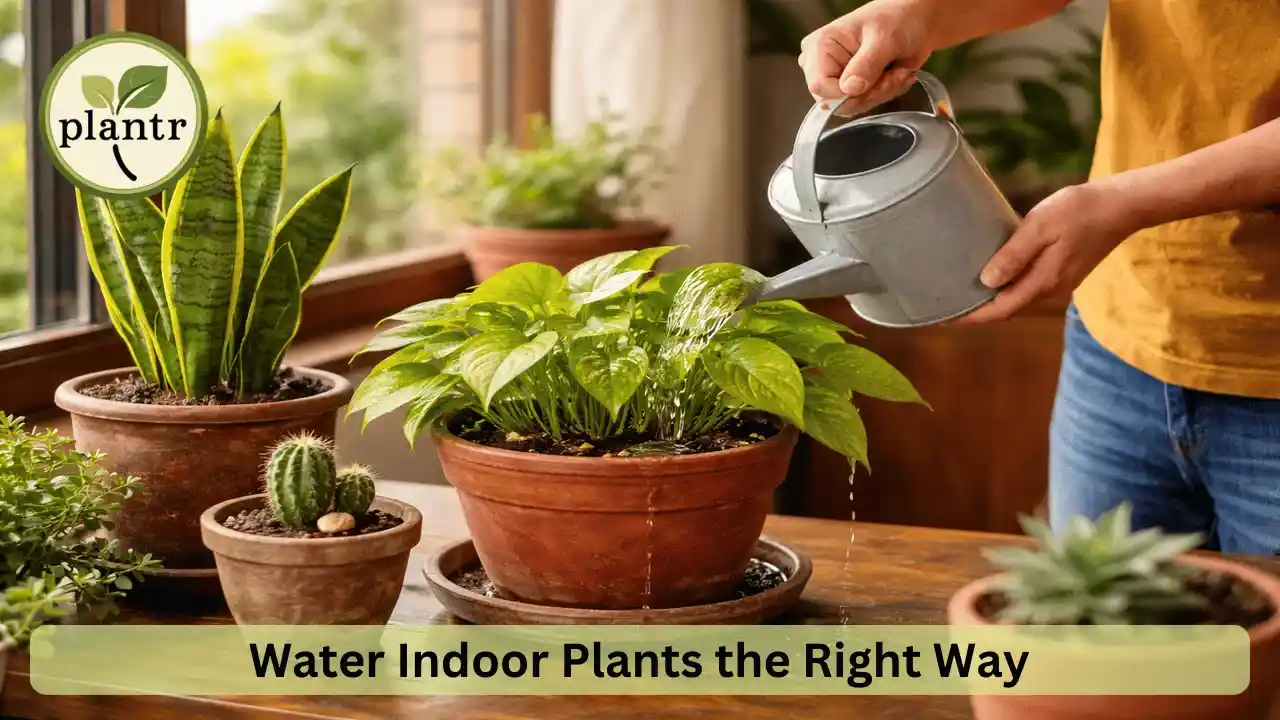
Water slowly until excess water drains out
Avoid small sips of water daily
Empty the saucer after 10–15 minutes
Deep watering helps roots grow stronger and prevents surface-only roots.
Common Beginner Mistakes to Avoid
Many new plant parents make these mistakes:
Watering all plants on the same day
Using a strict weekly schedule
Ignoring drainage holes
Watering even when soil is already moist
Understanding how often should you water indoor plants means learning to observe, not rush.
Should You Water Indoor Plants in the Morning or Evening?
Generally, morning watering is better.
Plants absorb water better
Soil dries slightly during the day
Less chance of fungal issues
Evening watering is okay sometimes, but avoid leaving soil soaking wet overnight.
FAQ
In summer, most indoor plants need watering every 4–7 days. Always check soil moisture before watering.
Usually no. Daily watering often leads to overwatering unless the plant is very small or kept in bright sunlight.
Use the finger test. Dry topsoil usually means it’s time to water.
No. Each plant has different needs based on its type, pot, and location.
Understanding Your Plant’s Watering Needs
Learning how often you should water indoor plants requires a little patience, but it doesn’t have to feel confusing. Instead of relying on fixed schedules, it’s more effective to observe your plant’s signals and adjust based on season, light, and soil condition. Proper watering works best when combined with balanced feeding—understanding how often you should fertilize plants helps maintain steady growth without overloading the soil.
Healthy soil also plays an important role in moisture balance. Enriching pots with natural compost, or learning how to make compost at home, improves soil texture and helps roots absorb water more efficiently.
Indoor gardening is less about perfection and more about careful observation. With time, you’ll naturally recognize when your plants truly need water and when they are perfectly fine.
In my own home garden, once I stopped watering on fixed days and started checking the soil first, my plants became healthier and more stable.