
Table of Contents
ToggleHow Deep Should Seeds Be Planted?
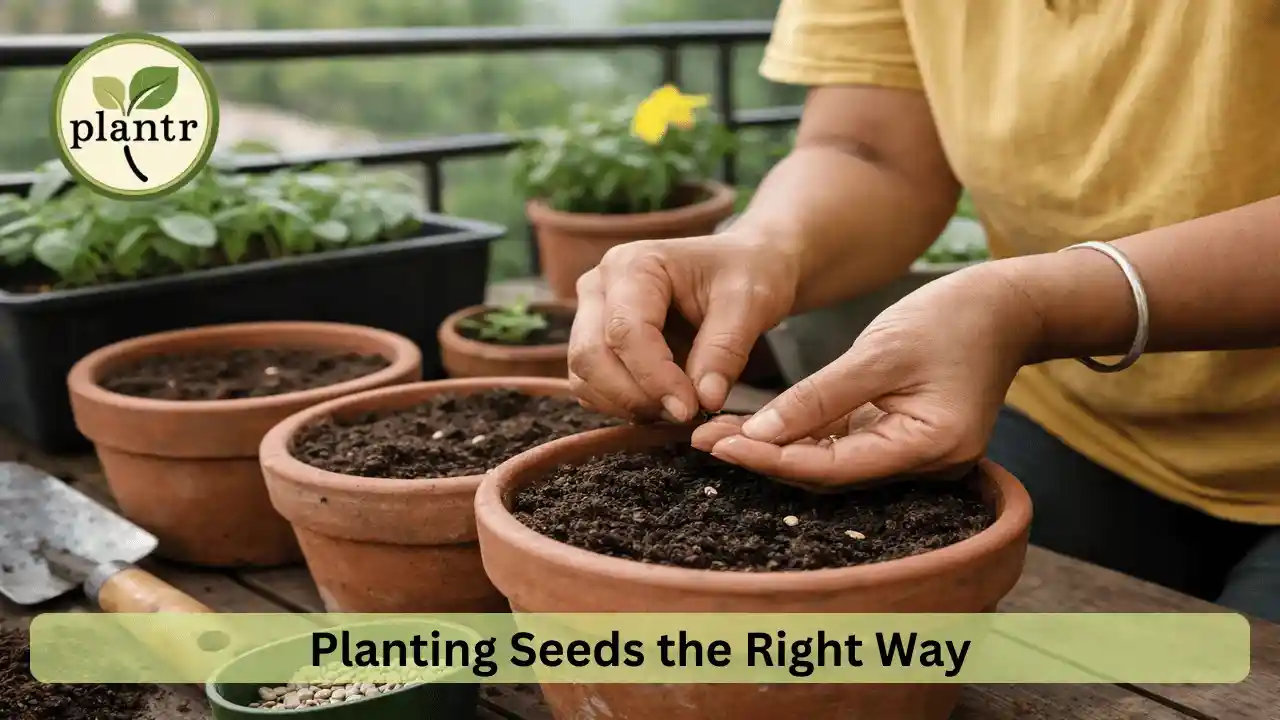
If you’re new to gardening, one of the first confusing questions is how deep should seeds be planted?
I remember my early days—some seeds never came up, while others popped out easily. Later I realised the problem wasn’t water or sunlight, but planting depth.
Seed depth is a small detail, but it makes a big difference. In most home gardens, seeds fail simply because they are planted too deep or too shallow. This guide is written like I’d explain it to a neighbour who’s just starting their gardening journey.
Let’s break it down in a simple, practical way—no technical terms, no shortcuts, just what actually works in everyday Indian home gardens.
Why Seed Planting Depth Matters
Seeds carry limited energy inside them.
That stored energy helps the seed push through the soil and reach sunlight.
If seeds are planted too deep, the seedling may run out of energy before reaching the surface.
If planted too shallow, the seed can dry out, wash away during watering, or get eaten by birds.
This is why understanding how deep should seeds be planted is important for healthy germination.
General Rule: How Deep Should Seeds Be Planted?
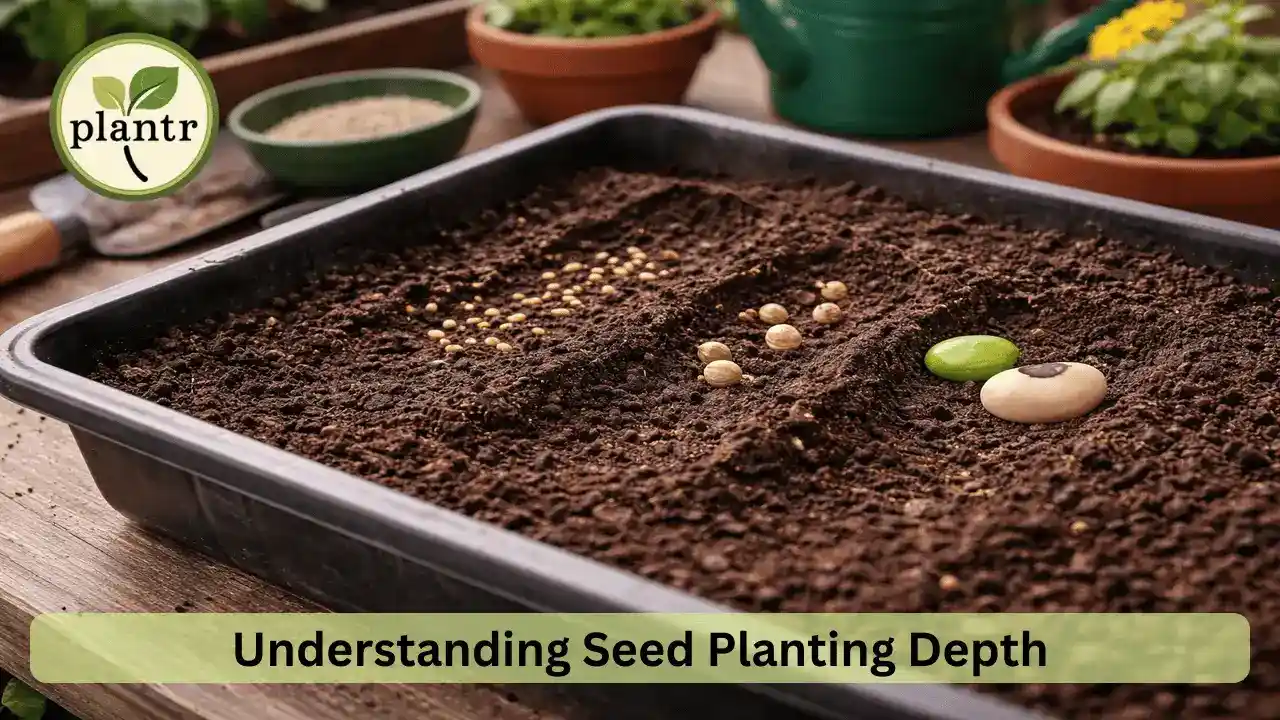
A commonly followed gardening rule is:
Plant seeds about 2–3 times as deep as their size
This works well for most vegetables, flowers, and herbs grown in pots or garden soil.
Simple examples:
Small seeds → very shallow
Medium seeds → slightly deeper
Large seeds → deeper holes
This rule helps beginners avoid overthinking seed depth.
Seed Depth Based on Seed Size
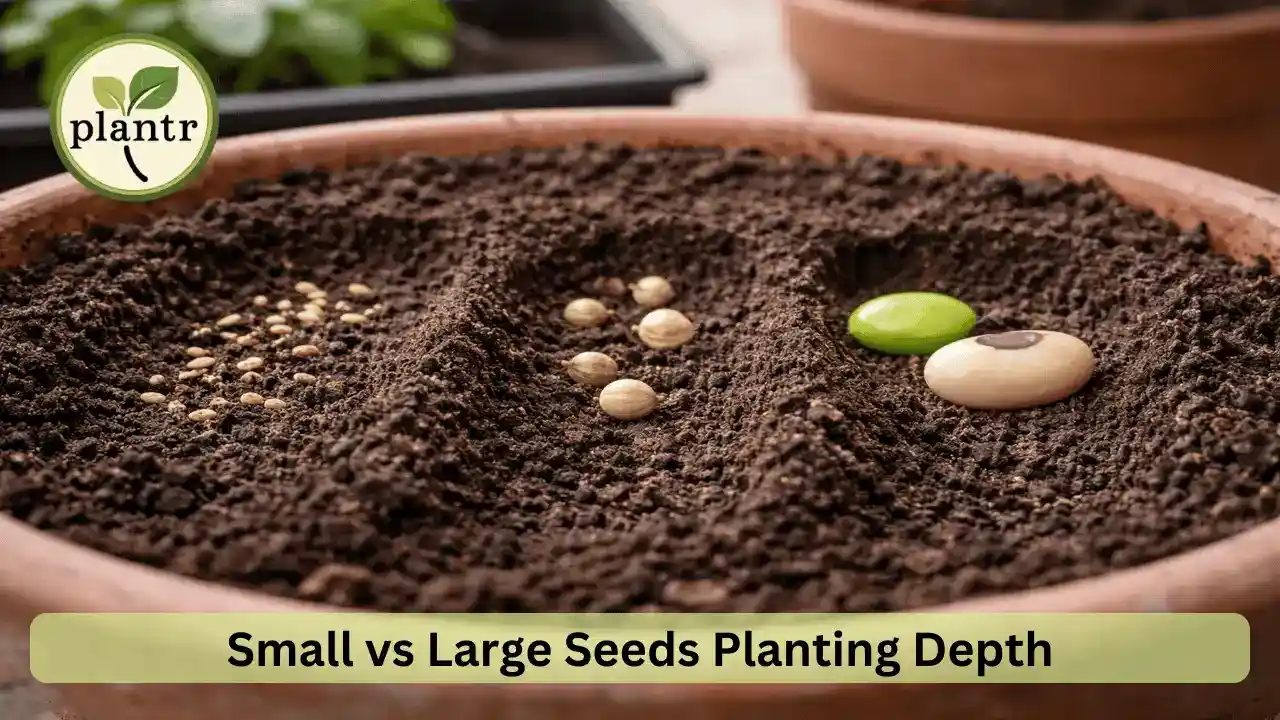
Small Seeds (Very Shallow Planting)
Examples:
Tomato
Chilli
Lettuce
Petunia
Basil
Small seeds usually need light to germinate.
How to plant:
Sprinkle seeds on soil
Cover lightly with a thin layer of soil or compost
Sometimes just pressing them gently is enough
In most home gardens, small seeds planted deep fail to sprout.
Medium Seeds (Moderate Depth)
Examples:
Okra (lady finger)
Coriander
Spinach
Fenugreek (methi)
Ideal depth:
Around 1–2 cm deep
These seeds are strong enough to push through soil but still need air and moisture balance.
Large Seeds (Deeper Planting)
Examples:
Peas
Beans
Corn
Pumpkin
Ideal depth:
2–4 cm deep
Larger seeds can handle deeper planting and usually sprout well when soil stays evenly moist.
How Deep Should Seeds Be Planted in Pots?
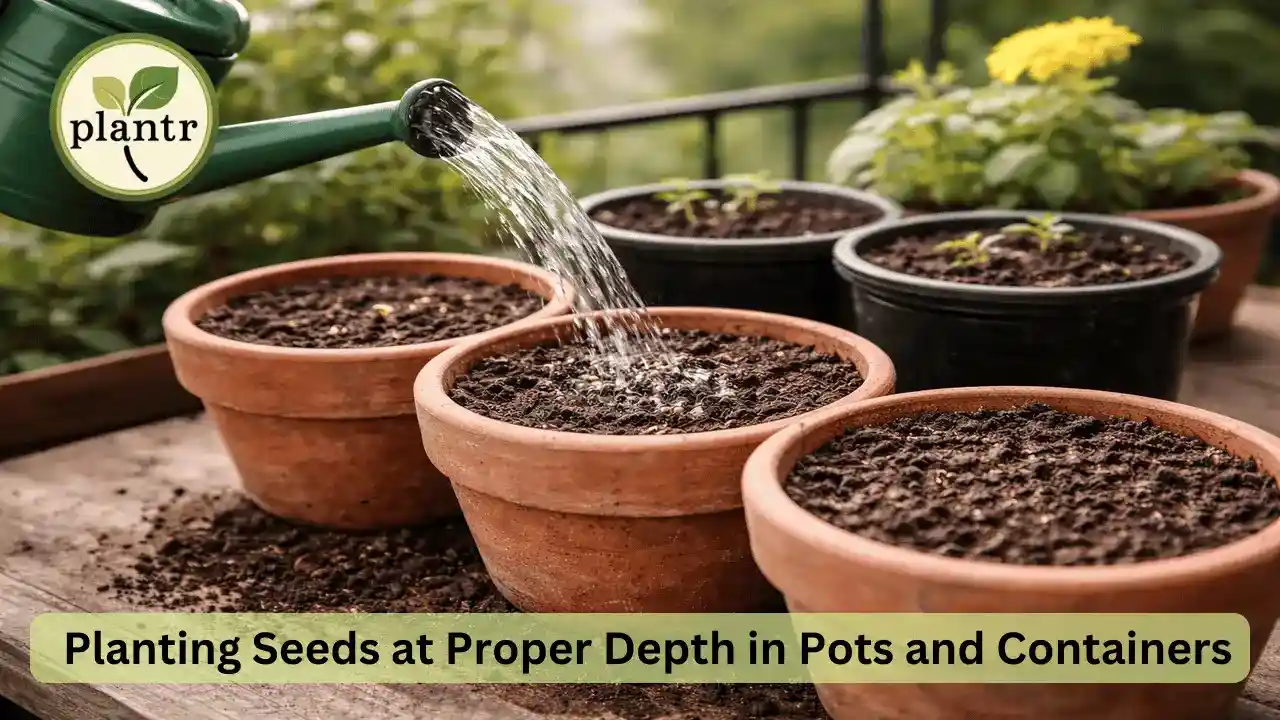
When growing in containers, seed depth becomes even more important.
In pots:
Soil dries faster
Drainage holes can wash seeds away
Space is limited
Tips for pots:
Avoid planting seeds at the bottom layer
Keep seeds closer to the surface
Water gently to avoid disturbing soil
In container gardening, shallow planting is generally safer than deep planting.
How Soil Type Affects Seed Depth
Soil texture plays a big role in seed planting depth.
Loose, well-draining soil:
Allows slightly deeper planting
Roots spread easily
Heavy or clay soil:
Seeds should be planted shallower
Soil can harden after watering
In most Indian home gardens with mixed soil, moderate depth works best.
Common Beginner Mistakes While Planting Seeds
Even experienced gardeners make these mistakes sometimes.
Planting all seeds at the same depth
Pressing soil too tightly on top of seeds
Watering with strong force after sowing
Burying tiny seeds thinking it protects them
Ignoring seed packet depth instructions
Understanding how deep should seeds be planted helps avoid most of these issues.
Should You Follow Seed Packet Instructions?
Yes, but don’t follow them blindly.
Seed packets usually give safe guidelines, but:
Local climate matters
Soil type differs
Pot size affects moisture
Use seed packet instructions as a reference, not a strict rule.
Watering After Planting Seeds
Planting depth and watering go hand in hand.
Shallow seeds need gentle misting
Deep-planted seeds need consistent moisture
Overwatering can rot seeds before sprouting
In most home gardens, watering lightly but regularly works better than soaking soil.
Signs Seeds Are Planted Too Deep
Watch out for these signs:
No seedlings even after expected days
Soil remains wet but no growth
Digging gently shows swollen but lifeless seeds
If this happens, try sowing again at a shallower depth.
Signs Seeds Are Planted Too Shallow
Seeds visible on soil surface
Seedlings fall over easily
Birds disturb the soil
In such cases, lightly cover seeds with compost or cocopeat.
FAQs: How Deep Should Seeds Be Planted?
Most vegetable seeds grow well when planted 2–3 times their size. Small seeds stay near the surface, while larger seeds go deeper.
Sometimes yes, but commonly they fail because they can’t reach sunlight in time.
In Indian conditions, shallow to medium depth works best due to heat and fast soil drying.
For beginners, slightly shallow planting is generally safer than planting too deep.
Final Thoughts
Learning how deep should seeds be planted is one of those small gardening lessons that saves a lot of frustration later.
You don’t need perfect measurements. Just observe seed size, soil type, and watering habits. Gardening improves with practice, and every failed seed teaches something useful.
Start simple, stay patient, and enjoy watching those tiny green shoots appear—it never gets old.