Table of Contents
ToggleDifference Between Garden Soil and Potting Soil
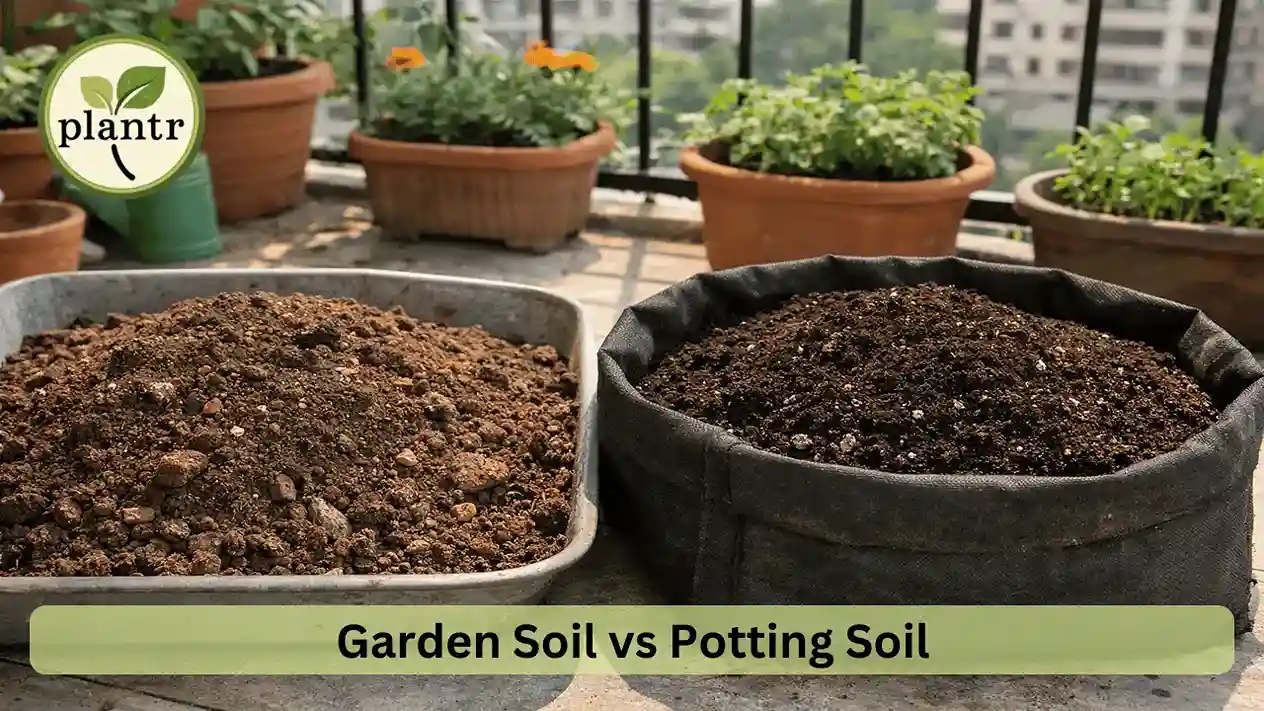
If you are new to gardening, one question almost everyone asks is: “Should I use garden soil or potting soil?”
At first glance, both look like soil, both feel similar, and both are used to grow plants. So it’s easy to get confused.
I remember when I started my small balcony garden, I used garden soil in pots thinking soil is soil. Some plants survived, some didn’t, and only later I understood the Difference Between Garden Soil and Potting Soil. Once you know this difference, half of your plant problems become easier to manage.
In this article, I’ll explain everything in simple language, just like one home gardener talking to another.
Understanding the Difference Between Garden Soil and Potting Soil
The main difference lies in where and how they are meant to be used.
Garden soil is made for plants growing directly in the ground, while potting soil is prepared specially for containers, pots, and grow bags.
Let’s break it down slowly.
What Is Garden Soil?
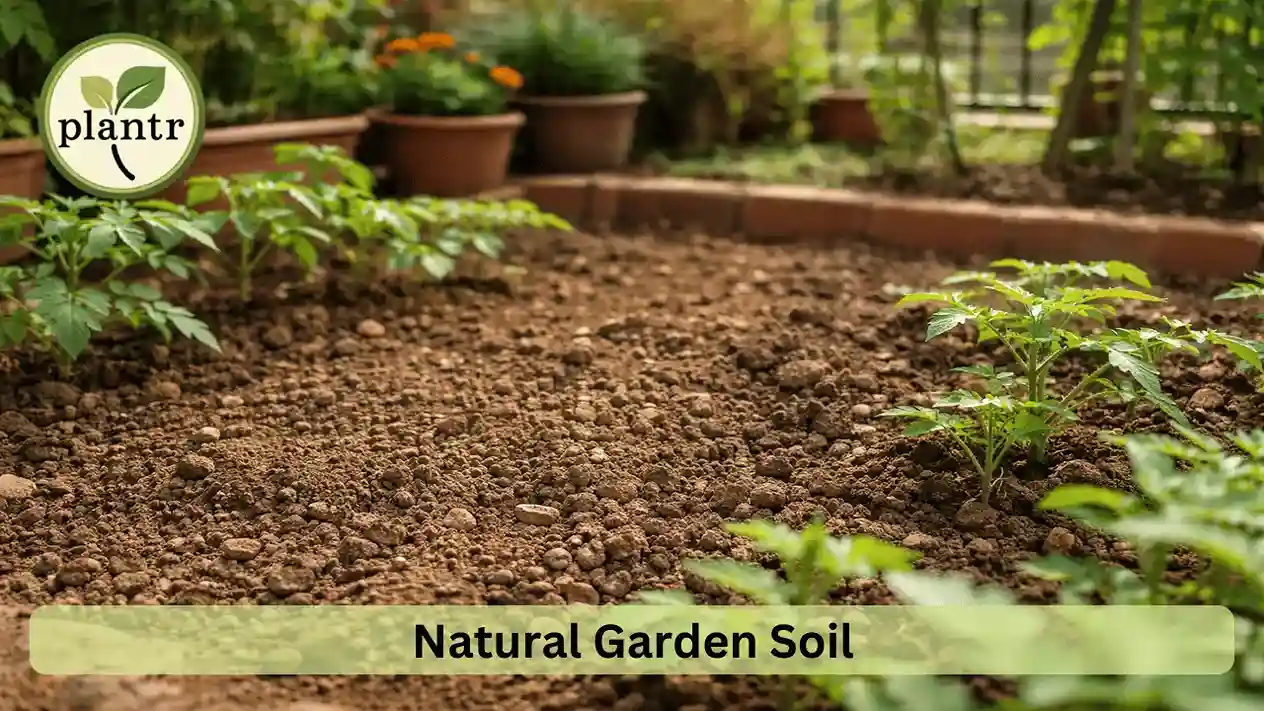
Garden soil is the natural soil you find in your backyard, open ground, or garden beds. In most home gardens in India, this soil is a mix of:
Natural soil (red soil, black soil, or sandy soil)
Small stones or clay
Organic matter like decomposed leaves
Common Characteristics of Garden Soil
Heavier and denser
Holds water for a longer time
May become hard or compacted
Quality varies from place to place
Garden soil is commonly used for:
Ground-level vegetable beds
Flower beds in open gardens
Trees and shrubs planted directly in the earth
What Is Potting Soil?
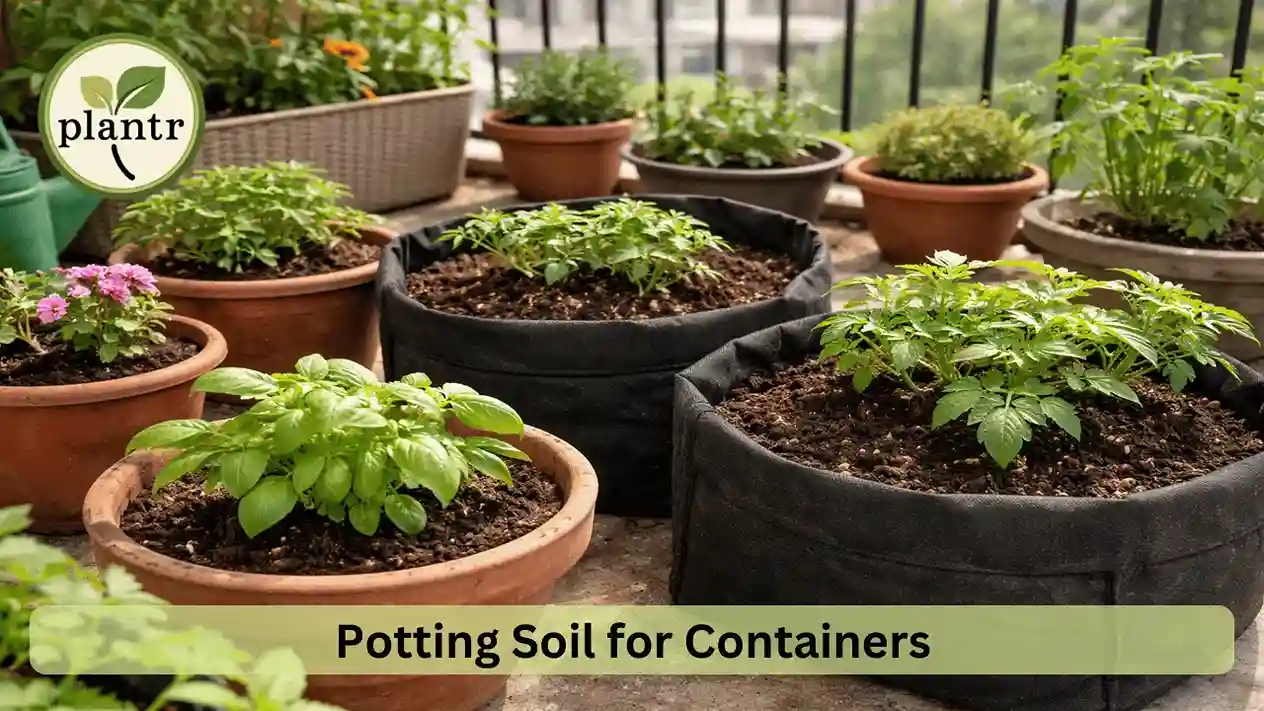
Potting soil (also called potting mix) is not plain soil. It is a prepared growing medium designed especially for containers.
In most cases, potting soil contains:
Coco peat or peat moss
Compost or organic matter
Perlite or sand for drainage
Common Characteristics of Potting Soil
Lightweight and airy
Drains excess water easily
Allows roots to breathe
Consistent texture in most brands
Potting soil is generally used for:
Pots and planters
Grow bags
Indoor plants
Balcony and terrace gardens
Difference Between Garden Soil and Potting Soil (Simple Comparison)
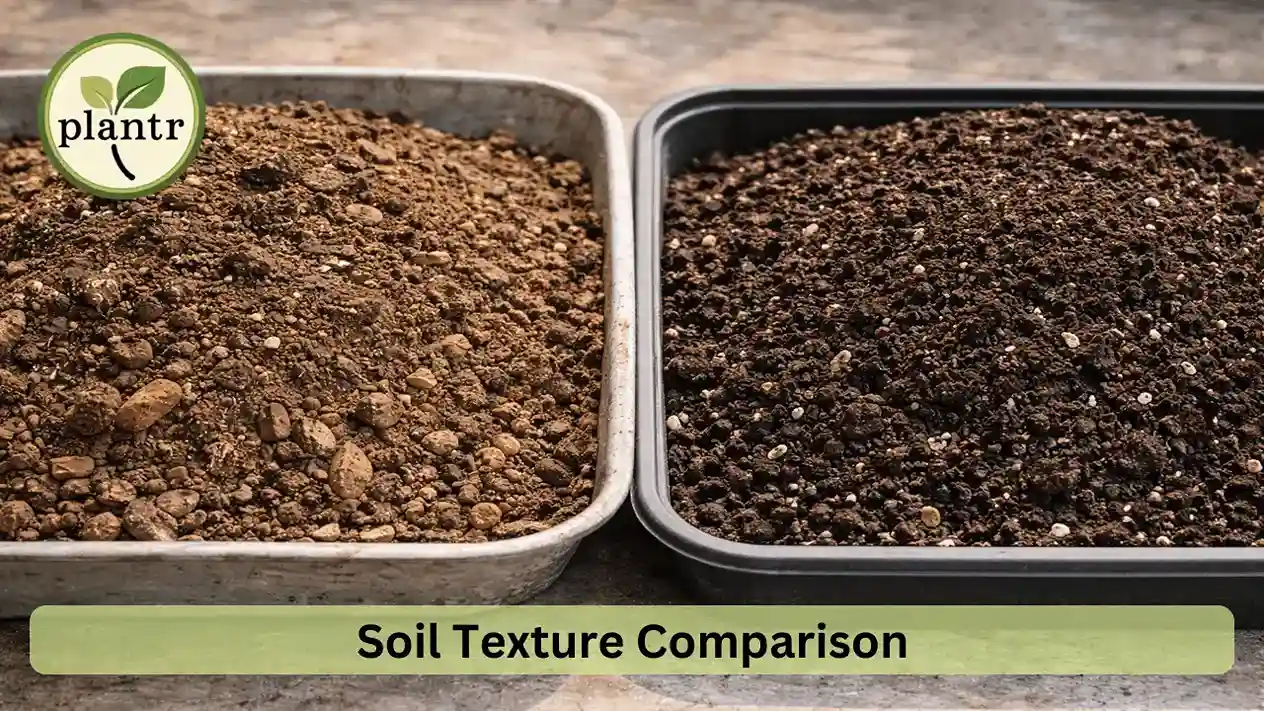
Here’s an easy way to understand the Difference Between Garden Soil and Potting Soil:
Weight
Garden soil is heavy. Potting soil is light.Drainage
Garden soil drains slowly. Potting soil drains well.Air flow to roots
Garden soil can block air. Potting soil keeps roots airy.Best use
Garden soil is best for ground planting. Potting soil is best for containers.
Can You Use Garden Soil in Pots?
This is one of the most common beginner mistakes.
Technically, you can use garden soil in pots, but it usually creates problems.
Common Problems When Using Garden Soil in Containers
Soil becomes hard after watering
Water stays trapped in the pot
Roots don’t get enough oxygen
Higher chance of root rot
In most home gardens, plants grown in pure garden soil inside pots grow slowly or look unhealthy after some time.
Can You Use Potting Soil in the Ground?
Yes, potting soil can be used in garden beds, but it may not always be practical.
Since potting soil is:
Lighter
More expensive
Designed mainly for containers
Using it for large garden areas is not always necessary. Garden soil mixed with compost works better for ground planting.
Soil Structure: Why It Matters So Much
One important part of the Difference Between Garden Soil and Potting Soil is soil structure.
Garden Soil Structure
Particles are packed closely
Can become compacted
Holds water tightly
Potting Soil Structure
Loose and crumbly
Better air circulation
Prevents waterlogging
Healthy roots need both moisture and air, and potting soil is designed with this balance in mind.
Nutrients: Garden Soil vs Potting Soil
Many people assume garden soil is richer, but that’s not always true.
Garden soil may or may not be nutrient-rich
Potting soil usually contains added compost
However, nutrients in potting soil do not last forever. In containers, regular feeding is still needed.
In both cases:
Compost improves soil health
Organic matter plays a big role
Which Soil Is Better for Indian Home Gardening?
For most Indian home gardeners:
Balcony gardening → Potting soil
Terrace gardening → Potting soil or soil mix
Backyard garden → Garden soil + compost
Climate, watering habits, and pot size also matter. In hot weather, potting soil dries faster, so regular watering is important.
Mixing Garden Soil and Potting Soil: Is It a Good Idea?
Yes, many gardeners do this successfully.
A common soil mix for pots is:
Garden soil (small amount)
Compost
Coco peat or sand
This improves:
Drainage
Nutrient availability
Soil texture
Just avoid using pure garden soil alone in containers.
Common Beginner Mistakes to Avoid
Using garden soil straight from the ground in small pots
Overwatering heavy soil
Ignoring drainage holes
Reusing old soil without refreshing it
Learning the Difference Between Garden Soil and Potting Soil helps avoid these issues early.
Practical Tip for Beginners
If you’re confused, follow this simple rule:
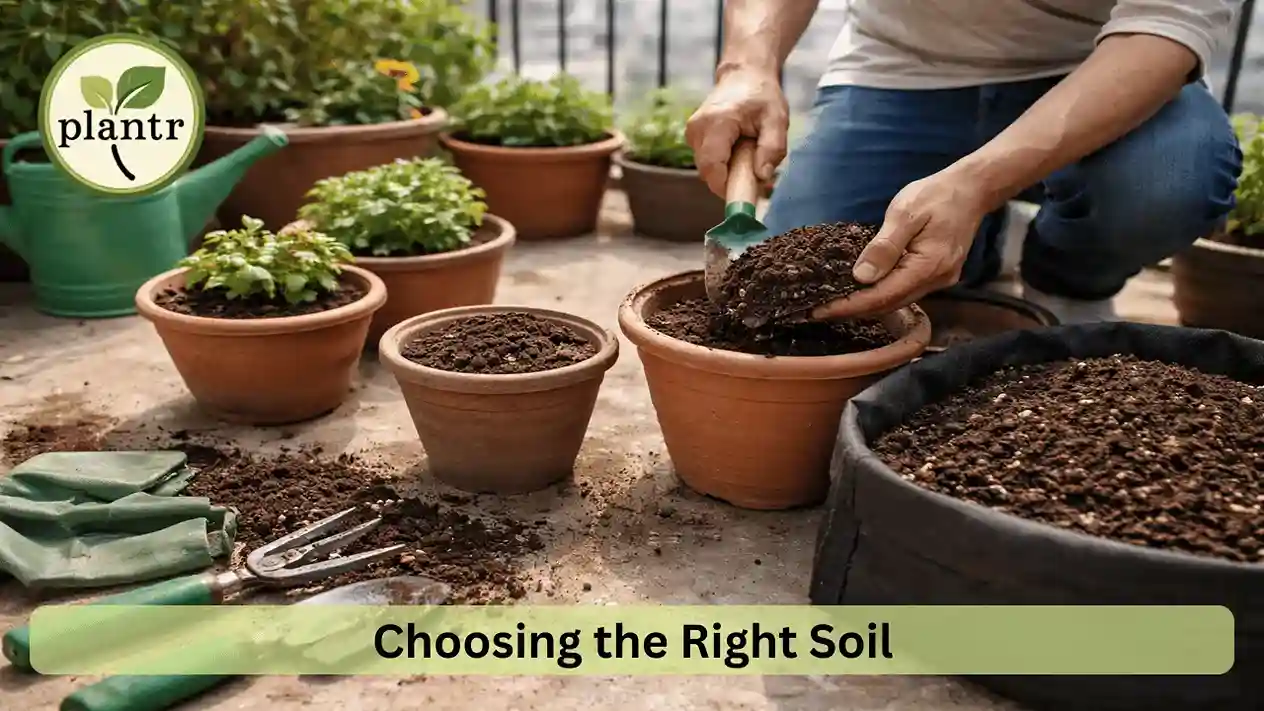
- Pots and grow bags need potting soil.
- Ground plants need garden soil with compost.
This rule works in most home gardens.
FAQs
Potting soil is better for pots and containers. Garden soil is better for ground planting. Each has its own use.
Yes, but it’s good to mix in fresh compost before reusing.
Garden soil compacts easily and holds too much water, especially in containers.
In most cases, yes. Indoor plants grow better in light, well-draining potting soil.
Understanding Yellow Leaves with Confidence
Yellowing leaves are among the most common plant concerns, especially for beginners. If you are just starting out, choosing easy plants to grow for first-time gardeners can reduce many common stress-related issues in the early stages. In most home gardens, yellow leaves are usually caused by simple care mistakes that can be corrected with small adjustments.
Understanding proper watering habits plays a major role. Learning how often you should water indoor plants can prevent both overwatering and underwatering, which are two of the most common reasons behind leaf discoloration.
When you understand the possible causes, you can respond calmly instead of worrying. Careful observation, balanced watering, healthy soil, and proper light exposure usually help plants recover gradually.
In my own garden, once I adjusted my watering routine and improved drainage, new leaves began growing greener and healthier within a few weeks.