
Table of Contents
ToggleDirect Sowing vs Transplanting: Which Is Better?
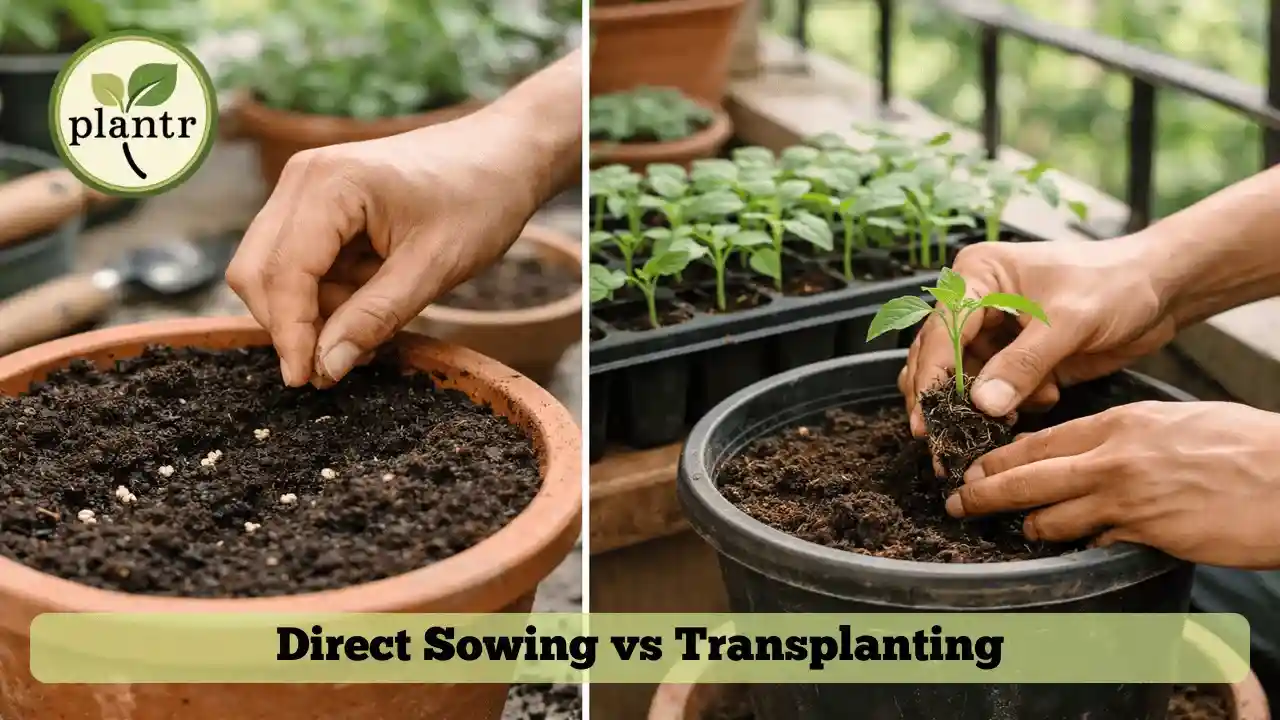
If you are just starting your gardening journey, one question will definitely come up — Direct Sowing vs Transplanting: Which Is Better?
I remember being confused about this in my early days too. Some gardeners told me to sow seeds directly in pots, while others suggested starting them in trays and transplanting later. Honestly, both methods work — but in different situations.
In most home gardens, especially balconies and small terraces in India, the choice depends on space, weather, and the type of plant you are growing. Let’s understand both methods in simple words so you can decide what works best for you.
What Is Direct Sowing?
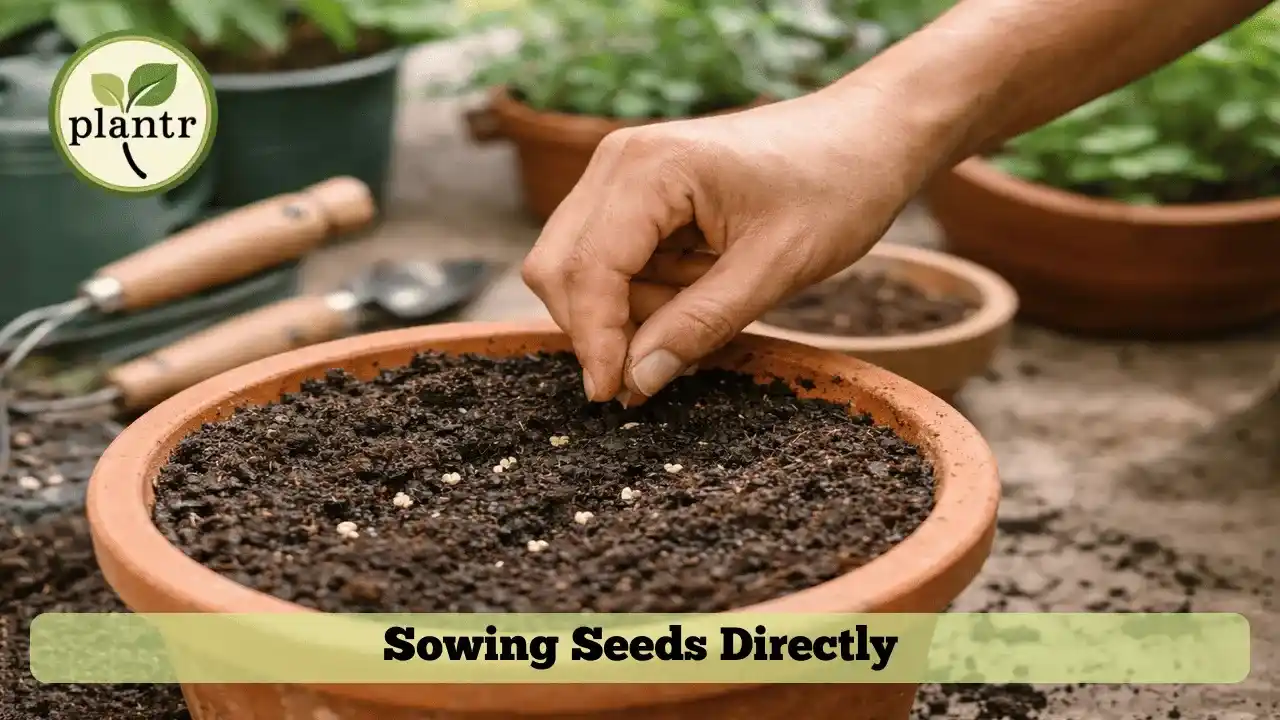
Direct sowing means planting seeds straight into the final container or garden soil where the plant will grow until harvest.
There is no shifting later. The seed germinates and grows in the same place.
When Is Direct Sowing Commonly Used?
Direct sowing is generally suitable for:
Fast-growing vegetables
Plants that don’t like root disturbance
Large seeds that are easy to handle
Some common examples in Indian home gardens include:
Beans
Peas
Spinach
Coriander
Radish
Carrot
These plants usually grow better when their roots are not disturbed.
Benefits of Direct Sowing
Many beginners prefer direct sowing because it feels simple.
Here are some advantages:
No transplant shock
Less handling of delicate seedlings
Saves time
No need for seed trays
In warm climates, especially during summer gardening in India, seeds often germinate quickly when sown directly in moist soil.
Challenges of Direct Sowing
However, it’s not always perfect.
You may face:
Uneven germination
Seeds washed away during heavy watering
Pests eating young sprouts
Difficulty managing spacing
In balcony gardening for beginners, direct sowing sometimes becomes tricky if containers are small and seeds are tiny.
What Is Transplanting?
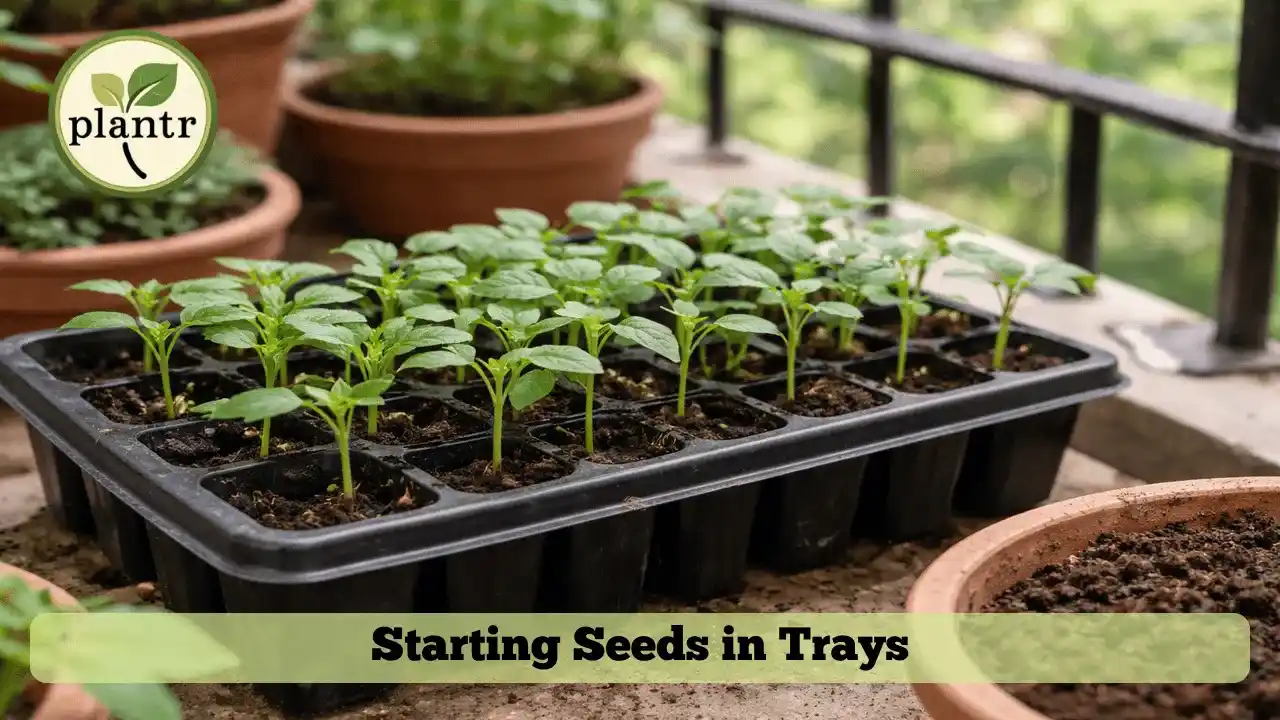
Transplanting means first growing seeds in a seed tray or small nursery pot and later shifting the young seedlings into bigger pots or garden beds.
This method is very common in vegetable gardening at home.
For example:
Tomato
Chilli
Capsicum
Cabbage
Cauliflower
Brinjal
These plants usually respond well to transplanting if done carefully.
Why Many Gardeners Prefer Transplanting
Transplanting gives you more control in the early stage.
Advantages of Transplanting
Better seed germination control
Protection from heavy rain
Easier seed starting indoors
Stronger root development before moving
If you are doing container gardening tips for small spaces, transplanting can help you manage limited space better. You can grow many seedlings in one tray and later select the healthiest ones.
The Problem of Transplant Shock
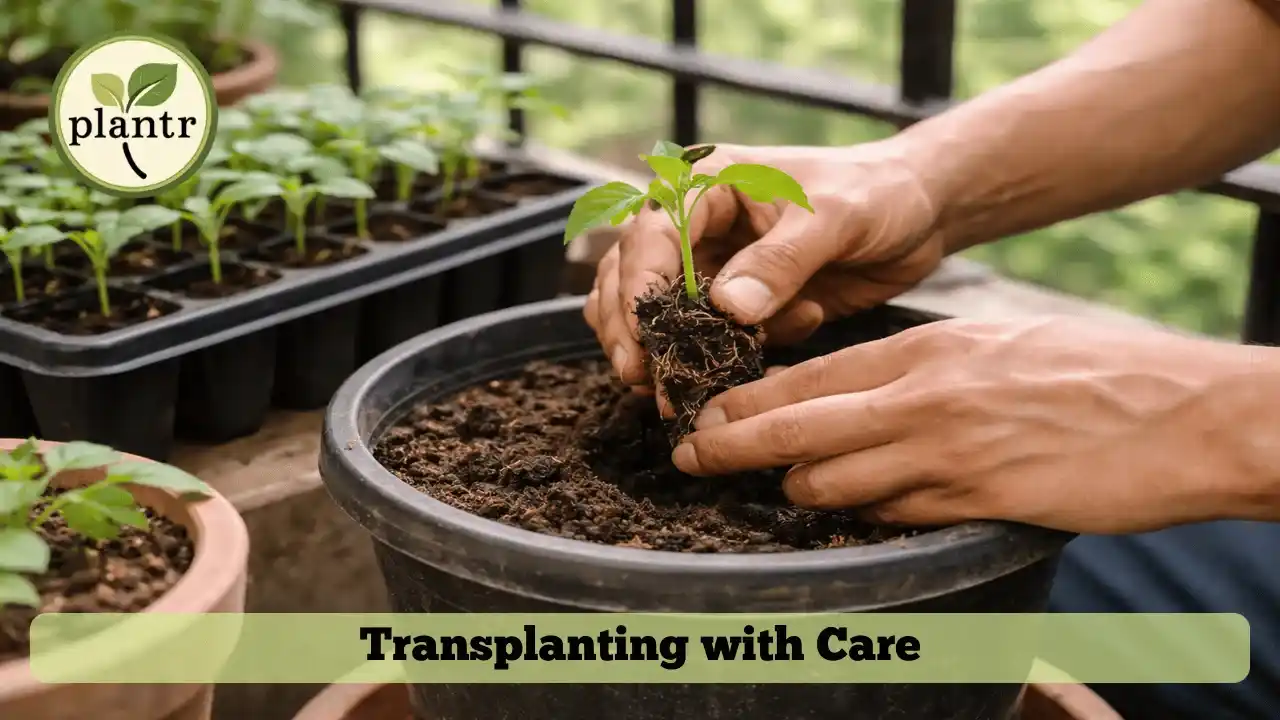
One common concern is transplant shock.
When shifting seedlings from trays to pots, roots may get disturbed. Sometimes the plant wilts for a few days. This is normal in most cases.
To reduce stress:
Transplant in the evening
Water lightly after shifting
Avoid direct harsh sunlight for 2–3 days
In most home gardens, seedlings recover well if handled gently.
Direct Sowing vs Transplanting: Which Is Better for Beginners?
Now let’s come back to the main question — Direct Sowing vs Transplanting: Which Is Better?
The honest answer is: it depends.
Direct Sowing Is Better When:
Growing root vegetables like carrot or radish
Plant roots are sensitive
You have enough space
Weather is stable
Transplanting Is Better When:
Seeds are very small (like tomato or chilli)
Weather is unpredictable
You want early start before season begins
You want to select strong seedlings
In seed starting methods, both techniques have their place.
Understanding Seed Germination in Both Methods
Seed germination depends on moisture, warmth, and air circulation.
With direct sowing:
Soil must stay consistently moist
Seeds may compete with weeds
With transplanting:
You can control watering better
You can monitor each seedling closely
For beginners, learning how to grow plants from seeds becomes easier when you observe seedlings in trays first.
Best Vegetables for Direct Sowing
Here are some vegetables that usually perform well with direct sowing in India:
Okra (Bhindi)
Beans
Spinach (Palak)
Coriander (Dhaniya)
Radish (Mooli)
Carrot
These plants generally dislike root disturbance.
Best Vegetables for Transplanting
Some vegetables commonly grown through transplanting:
Tomato
Chilli
Capsicum
Brinjal (Baingan)
Cabbage
Cauliflower
In most vegetable gardening at home setups, these crops are first grown in trays.
Common Beginner Mistakes
No matter which method you choose, beginners often make small mistakes.
1. Planting Seeds Too Deep
Many seeds fail because they are buried too deep.
As a general rule, plant seeds at a depth about twice their size.
2. Overwatering
This is very common. Wet soil is good, but soggy soil can cause seed rot.
3. Transplanting Too Early
If seedlings are too small, they may not survive shifting.
Wait until 3–4 true leaves appear.
4. Ignoring Sunlight Needs
After transplanting, sudden exposure to strong sunlight can stress plants. Gradual adjustment works better.
Seasonal Considerations in India
Climate plays a big role.
During monsoon:
Direct sowing may struggle due to heavy rain.
Seed trays kept under shade can be safer.
During winter:
Transplanting helps start seeds early in protected areas.
During peak summer:
Direct sowing works well for heat-loving crops like okra.
In most home gardens across India, gardeners often use both methods depending on the season.
So, Direct Sowing vs Transplanting: Which Is Better?
If you ask me from experience, I don’t follow just one method.
I usually:
Direct sow leafy greens and root vegetables
Transplant fruiting vegetables like tomato and chilli
That balance works well in small urban gardens.
Instead of asking which method is “better,” it may help to ask — which method suits this plant, this season, and this space?
Gardening is rarely about strict rules. It’s more about observing and adjusting.
FAQs
Yes, generally it feels simpler because there is no shifting involved. But success also depends on choosing the right plants.
No. Many vegetables like radish, carrot, and spinach usually grow better when directly sown.
Transplant shock is temporary stress when seedlings are moved from trays to pots. In most cases, plants recover within a few days.
Absolutely. Many home gardeners use direct sowing for leafy greens and transplanting for fruiting vegetables.
Finding the Right Method for Your Garden
When comparing direct sowing and transplanting, there isn’t one single “best” method for every gardener. Both approaches have their own benefits and can be useful depending on the plant type, available space, and growing conditions.
Direct sowing is simple and works especially well for hardy vegetables that don’t like root disturbance. Transplanting, on the other hand, provides better control during the early growth stage and is helpful for delicate or slow-growing seedlings.
In most home gardens—especially balcony setups—a balanced combination of both methods often produces the best results. Start small, try different approaches, and observe how your plants respond in your specific environment. Over time, you’ll naturally discover which method suits your gardening style.
In my own garden, I found that sowing leafy greens directly while transplanting tomatoes gave me healthier plants and better overall success.