Table of Contents
ToggleHow to Make Liquid Fertilizer at Home
If you’ve been gardening for some time, you’ve probably wondered whether you really need to buy expensive fertilizers from the market. In most home gardens, especially balcony or terrace setups in India, plants respond well to simple homemade inputs.
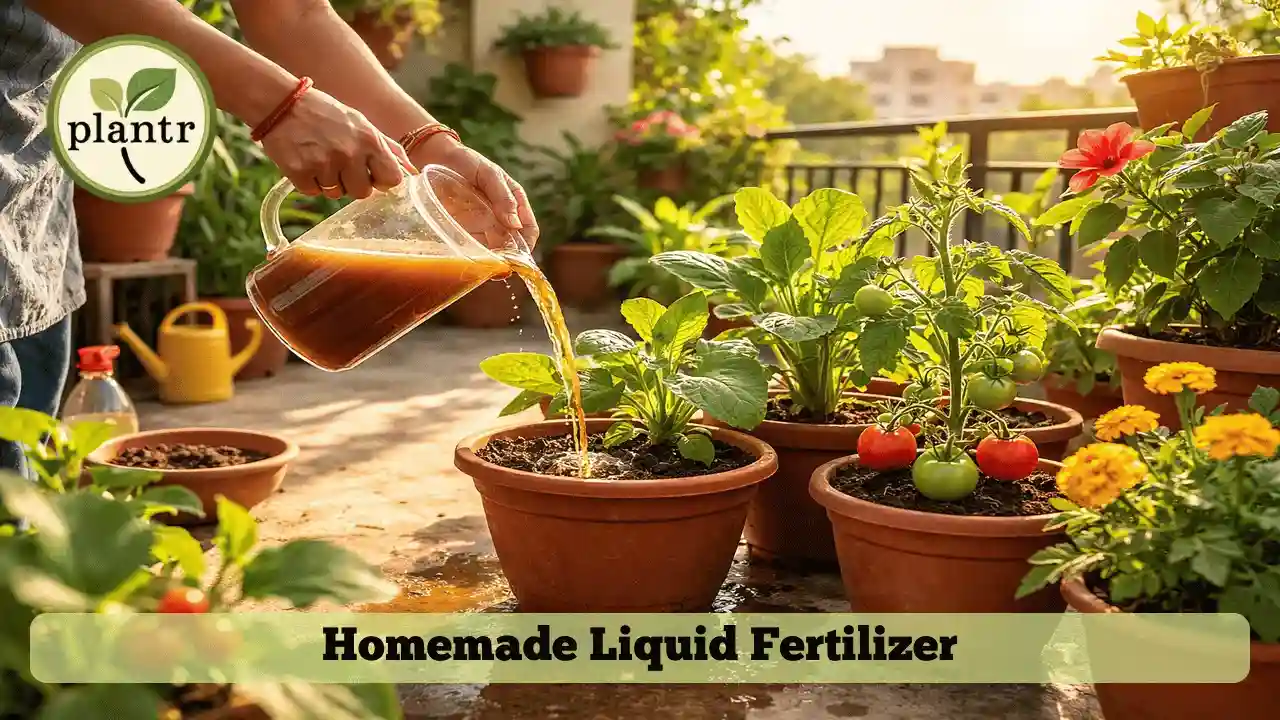
Learning How to Make Liquid Fertilizer at Home is not complicated. In fact, many of the ingredients are already available in your kitchen. As a home gardener, I’ve found that liquid fertilizers are easier to apply, get absorbed quickly, and are convenient for potted plants.
In this guide, I’ll explain everything in a simple way — what liquid fertilizer is, how to prepare it, when to use it, and some common beginner mistakes to avoid.
What Is Liquid Fertilizer?
Liquid fertilizer is simply a nutrient-rich solution made by soaking or fermenting organic materials in water. Instead of mixing dry compost into soil, you feed plants with diluted liquid form.
In most balcony gardens, liquid fertilizer for plants works well because:
Pots have limited soil.
Nutrients wash away faster with watering.
Liquid feeds reach roots quickly.
Many gardeners use it as an organic liquid fertilizer for vegetables, flowering plants, and even indoor plants.
Why Make Liquid Fertilizer at Home?
There are several practical reasons to try homemade liquid plant food:
It reduces kitchen waste.
It is budget-friendly.
You know exactly what goes into it.
It is generally gentle when diluted properly.
For beginners, it’s also a good way to understand how plants respond to feeding.
How to Make Liquid Fertilizer at Home Using Kitchen Waste
One of the easiest ways is using everyday kitchen scraps.
1. Vegetable Peel Fertilizer
This is one of the most common methods in Indian homes.
You’ll need:
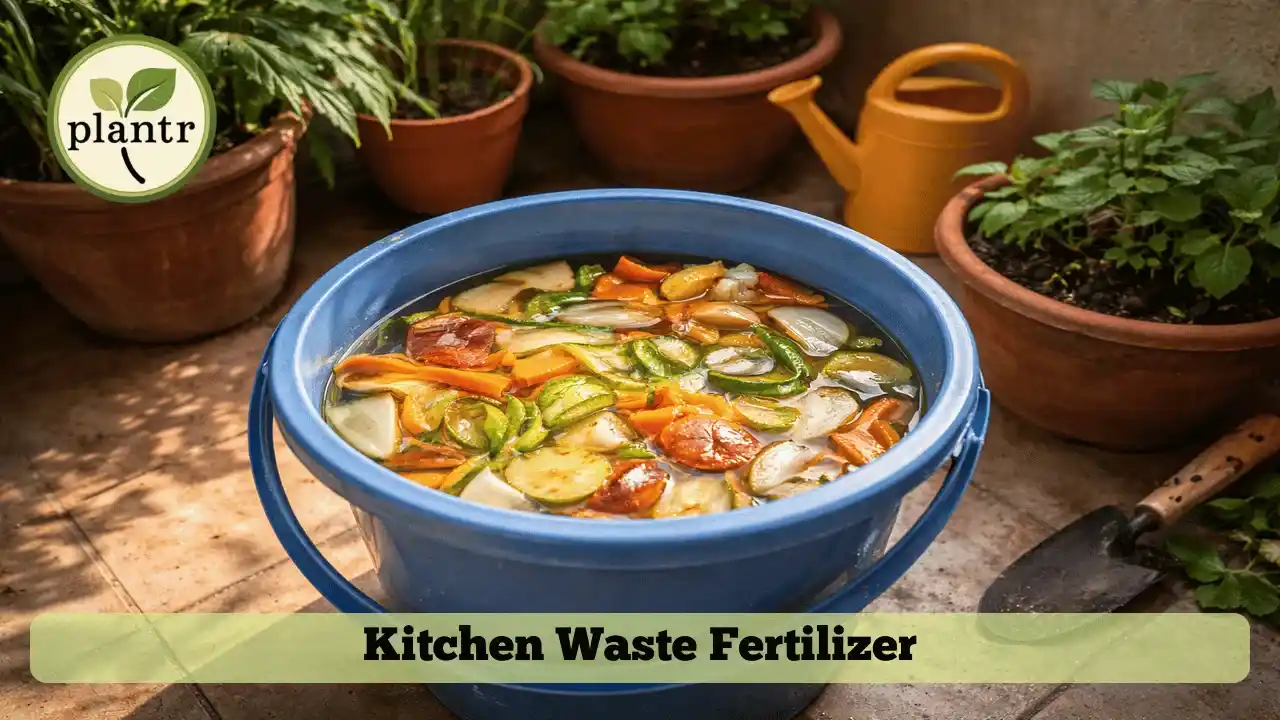
Vegetable peels (lauki, potato, carrot, etc.)
A bucket with lid
Water
Steps:
Put vegetable peels into a bucket.
Add enough water to fully cover them.
Close the lid loosely.
Let it sit for 3–5 days in a shaded place.
Strain the liquid.
Dilute with water (1 part solution to 5–10 parts water).
Use it once every 10–15 days.
This is a simple natural fertilizer for home garden plants and works well in most situations.
2. Banana Peel Liquid Fertilizer
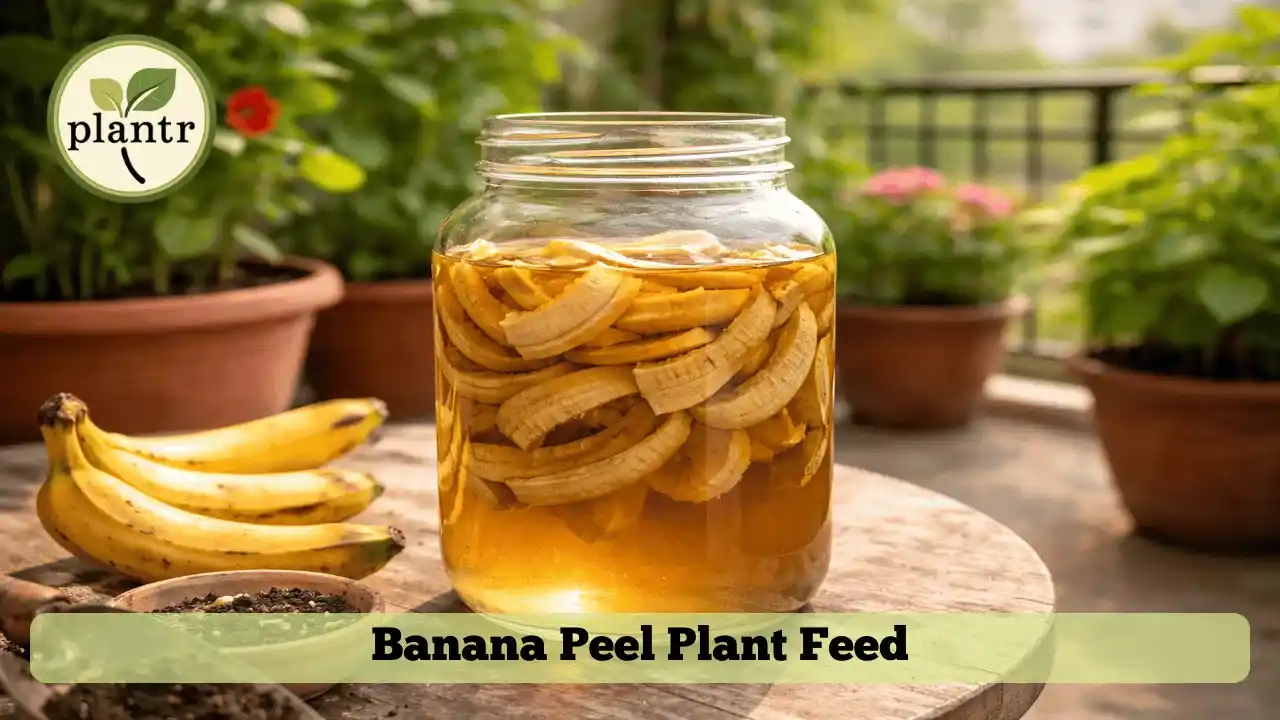
Banana peels are commonly used as they contain potassium, which flowering and fruiting plants generally appreciate.
How to prepare banana peel fertilizer:
Chop 2–3 banana peels.
Soak in 1 litre water for 2–3 days.
Strain and dilute before use.
This homemade liquid fertilizer for flowering plants is often used for roses, hibiscus, and vegetables like tomatoes and chillies.
3. Compost Tea (Simple Version)
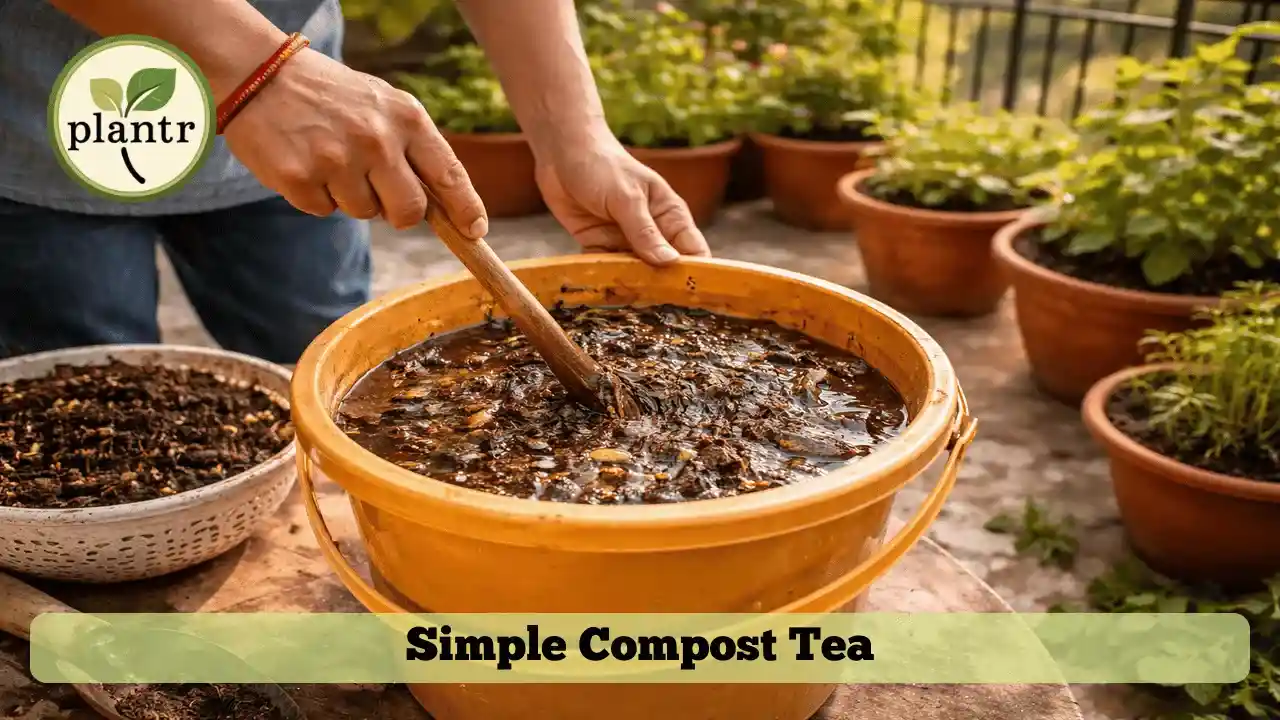
If you already make compost, this method is very easy.
Steps:
Take a handful of well-decomposed compost.
Put it in a bucket with 2–3 litres of water.
Let it sit for 24–48 hours.
Stir occasionally.
Strain and dilute before use.
Compost tea for plants is one of the most balanced liquid fertilizers because compost already contains mixed nutrients.
How to Make Liquid Fertilizer at Home for Balcony Plants
Balcony plants in pots need special care because nutrients get washed out faster.
When using liquid fertilizer for potted plants, keep these tips in mind:
Always water the plant lightly before feeding.
Never apply concentrated solution directly.
Feed during morning or evening, not in harsh afternoon sun.
Start with smaller quantities and observe the plant.
In most home gardens, feeding once every 10–15 days is usually enough.
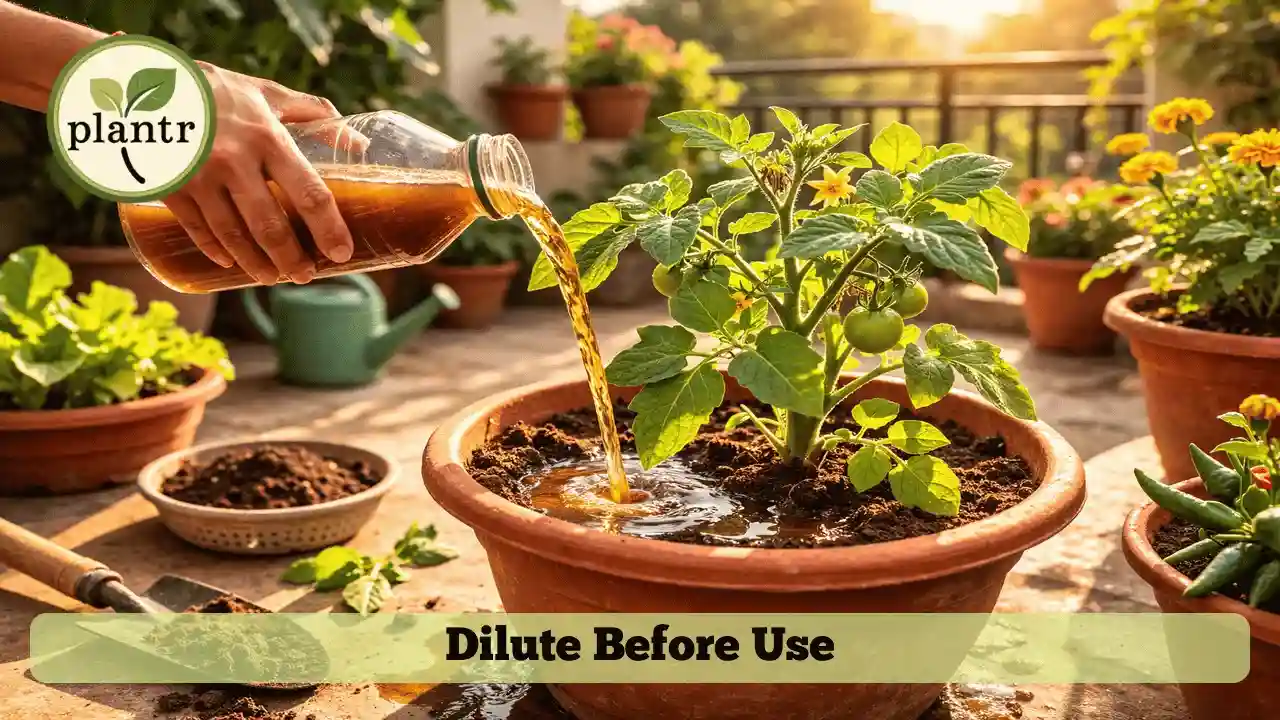
Liquid Fertilizer Dilution Ratio (Very Important)
One common beginner mistake is using fertilizer without proper dilution.
Generally:
Light plants (like leafy greens): 1:10 dilution
Flowering or fruiting plants: 1:5 to 1:8 dilution
Indoor plants: even lighter, around 1:15
If you are unsure, always dilute more. It is safer to underfeed than overfeed.
When to Use Homemade Liquid Fertilizer
Timing matters.
Use liquid fertilizer:
During active growing season.
When plants are producing flowers or fruits.
If leaves look slightly pale (but not diseased).
Avoid using during:
Very hot summer afternoons.
Immediately after repotting.
When plants are stressed or wilting.
In most Indian climates, regular light feeding works better than heavy feeding once a month.
Common Beginner Mistakes to Avoid
When learning How to Make Liquid Fertilizer at Home, beginners often make these mistakes:
❌ Using Too Many Ingredients
Keep it simple. Mixing too many items can create imbalance or unpleasant smell.
❌ Not Diluting Properly
Concentrated solutions can damage roots.
❌ Storing for Too Long
Homemade solutions are best used fresh, usually within a week.
❌ Feeding Dry Soil
Always water lightly before applying liquid fertilizer.
❌ Expecting Instant Results
Liquid fertilizers support growth gradually. Plants still need sunlight, proper soil mix, and watering.
How Often Should You Feed Plants?
There is no fixed rule, but generally:
Vegetables: every 10–15 days
Flowering plants: every 15 days
Indoor plants: once a month
Observe your plants. In most home gardens, plants show improvement slowly over weeks, not overnight.
Is Homemade Liquid Fertilizer Enough?
For many small balcony gardens, yes, it is often sufficient when combined with:
Good quality soil mix
Regular compost addition
Proper watering
Adequate sunlight
However, if plants show consistent nutrient deficiencies, you may need to improve soil health overall.
Homemade fertilizer for vegetables works best as part of a balanced gardening routine, not as a magic solution.
FAQs
Generally, once every 10–15 days is enough. Weekly feeding may be too much for most potted plants.
It can have a mild fermented smell. Keeping the container loosely covered and using it fresh usually reduces strong odor.
Yes, but dilute it more than usual. Indoor plants typically need lighter feeding.
It is best used within 5–7 days. After that, nutrient balance and smell may change.
A Simple Step Toward Sustainable Gardening
Learning how to make liquid fertilizer at home is a practical and rewarding step toward more sustainable gardening. It helps reduce kitchen waste, save money, and build a closer connection with your plants through mindful care.
You don’t need to try every method at once. Begin with one simple recipe, apply it gently, and observe how your plants respond over the next few weeks. Small, consistent efforts usually bring better results than complicated routines.
Gardening isn’t about following perfect formulas. It’s about slowly understanding what your plants need and adjusting along the way. In most home gardens, regular simple practices make a far greater impact than advanced techniques.
In my own garden, using a mild homemade liquid feed once every two weeks noticeably improved leaf color and overall plant growth without any extra expense.